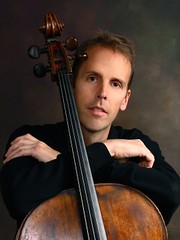
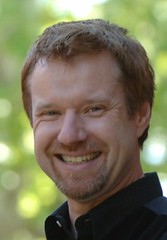
Showing posts with label Edward Lein. Show all posts

Tuesday, June 17, 2014

Music @ Main 2014-2015 Season Opener : Concert & Reception


Tuesday, September 16 @ 7pm*
  • Max Huls, violin
  • Alexei Romanenko, cello
  • Christine Clark, piano
Chamber Music by Edward Lein

Sonatina for Violin & Piano
       I. Allegro moderato -  II. Nocturne - III. Scherzo (Finale)
[listen at InstantEncore [Score (PDF)]


Sonatina for Cello & Piano "Bygones" (Premiere)
       I. Prelude (Nostalgia) - II. Fugue (No Regrets) - III. Finale (Bygones)
[listen on InstantEncore]
[Score (PDF)]

Un Duclito: Suite for Violin & Cello (Premiere)
       I. Hoodoo (Samba) - II. Tangle (Tango) - III. La llarona - IV. Rumor (Rumba)
[listen on InstantEncore]
[Score (PDF]

Piano Trio (Premiere)
       I. Energetic - II. Minuet in Olden Style - III. Dark Eyes (Variations)
[listen on InstantEncore]
[Score (PDF]

* Please note the date change made to avoid a conflict with another City event

ABOUT THE PERFORMERS


Originally from Jefferson City, Missouri, violinist Max Huls joined the Jacksonville Symphony Orchestra in 1993, and was introduced to the First Coast as soloist in Bartók’s Second Rhapsody for violin and orchestra. Mr. Huls is on the faculty of the Prelude Chamber Music Camp and is a violin coach for the Jacksonville Symphony Youth Orchestra. He appeared variously as concertmaster, soloist and conductor with the Savannah Symphony, and was concertmaster of the Coastal Symphony of Georgia, the Memphis Symphony and Opera Memphis. Max was on the faculty of the University of Memphis and Rhodes College, and while living in Tennessee was in demand as a studio musician, working with the rock group The Replacements and soul legends Patti LaBelle and Al Green, among many others. Max was second violin with the Peninsula Music Festival in Wisconsin, and also has participated in the Aspen Music Festival, Colorado Music Festival in Boulder, Missouri Symphony Society, Eastern Music Festival, and Memphis Chamber Music Society. Since age 16, Max has shared the solo violin's celebrated masterpieces and forgotten treasures in recital, including Bach's Six Sonatas and Partitas, the Six Sonatas by Eugène Ysaÿe, and works by Bartók, Nielsen, Franck and Paganini. He appears frequently in local concerts and recitals, and has regularly contributed his time and talent to Jacksonville Public Library's  Music @ Main concert series. As a member of Duo Proto, Max plays alongside his son Victor Minke Huls, who in turn plays a number of instruments including flute, cello, mandolin and piano. His degrees include a Bachelor of Fine Arts in Music and Philosophy from Stephens College, and a  Master of Music from University of Memphis

Alexei Romanenko has been the principal cellist with the Jacksonville Symphony Orchestra since the 2005-2006 season. Born in Russia, he began his cello studies at age six, and at twelve won First Prize in the Far-Eastern Competition. Mr. Romanenko studied at the Moscow Conservatory, and in 1993 became a Laureate of “New Names,” an international program with extensive touring throughout Russia; he also garnered top prize in the Gnesina College Cello Competition. Moving to the United States in 1998, he was awarded the Artist Diploma from the New England Conservatory of Music, where he studied with Bernard Greenhouse and Laurence Lesser. Mr. Romanenko won First Prize at the 8th International Music Competition (Vienna, Austria) in 1999, and First Prize at the 2nd Web Concert Hall International Auditions in 2000. He has composed and arranged works for unaccompanied cello, and written cadenzas for numerous cello concerti. His versatility as soloist, recitalist and chamber musician has led to appearances with major orchestras and recital engagements worldwide, and he has been heard in national and international radio broadcasts. Alexei is also an organist and pianist, and holds artist residencies in colleges and universities across North America and abroad.

A native of Jacksonville, Florida, Christine Armington Clark began piano studies with James Crosland, and continued her professional training at Oberlin Conservatory. She received a master's degree in piano performance from the University of Illinois, and studied with Leon Fleisher in the Peabody Conservatory Artist Diploma Program upon the recommendation of legendary concert pianist Lorin Hollander. Ms. Clark was national finalist in the Collegiate Artist Competition sponsored by the Music Teachers National Association, and attended the Aspen Music Festival on a piano performance and accompanying scholarship. She competed in the Maryland International Piano Competition, and won the Boca Raton Piano Competition. A versatile musician, Ms. Clark played keyboard with Trap Door, a local rock group, and toured Europe under the aegis of Proclaim! International. She taught piano at Westminster Choir College in Princeton, New Jersey, and her chamber music performances include an appearance at the Goethe Institute in San Francisco. Well known along the First Coast, Ms. Clark has appeared with the Jacksonville Starlight Symphonette and the Jacksonville Symphony Orchestra, and has appeared in numerous solo recitals and in collaboration with many of the areas finest instrumentalists and vocalists. She has served on the Boards of several arts organizations, is a past President of Friday Musicale, and is on the faculty of Prelude Chamber Music camp. While working as a law clerk in Washington, D.C., Christine gave perhaps her most unusual recital, performing in the United States Supreme Court at the request of Justice Sandra Day O'Connor.

ABOUT THE COMPOSER

Florida native Edward Lein (b. 1955) holds master's degrees in Music and Library Science from Florida State University. Early in his career he appeared throughout his home state as tenor soloist  in recitals, oratorios and dramatic works, and drawing on this performance experience the majority of his early compositions are vocal and choral works. Following performances of pieces by the Jacksonville Symphony, including Meditation for cello, oboe and orchestra (premiered June 2006) and In the Bleak Midwinter (premiered December 2007), his instrumental catalog has grown largely due to requests from Symphony players for new pieces.  His translations of songs and song cycles are frequently published in music program guides in North America and Great Britain, ranging from student recitals to concerts by major orchestras, including Orchestre symphonique de Montréal and the Utah Symphony; he also contributes articles to the Jacksonville Symphony Orchestra's Encore magazine.  After 28 years as the Music Librarian for the City of Jacksonville, Ed retired from full-time employment in July 2014, but still produces Jacksonville Public Library's popular Music @ Main concert series.


PROGRAM NOTES, by the composer

Sonatina for Violin and Piano
The Sonatina for Violin and Piano was composed in the summer of 2007 for Max Huls and Christine Clark, who premiered the work the following June. As the title suggests, its direct, neoclassical style incorporates familiar formal patterns. The first movement is a sonata form, and the Nocturne presents a languid tune that alternates with a hymn-like chorale. The final Scherzo is an incisive transformation of the second movement theme, and its “trio” section further transforms the tune into a rather mundane parlor waltz that gains character as it progresses.

Sonatina for Cello & Piano ("Bygones”)
The initial inspiration for the Sonatina for Cello and Piano came in 2010 with a general call to composers from Alexei Romanenko for 5-minute pieces for cello and piano.  That resulted in what became the Sonatina's Finale, and the Prelude and Fugue movements were composed in 2012 as companion pieces. Subtitled “Nostalgia,” the first movement reflects a definite “Romantic” melodic sensibility. The second movement begins with a 12-tone fugal exposition, but the subject is then “transposed” into the movement’s home key of B minor;  in a further departure from traditional fugal technique, the episodes between statements of the subject are more lyrical than developmental. Although the sonata-form third movement was introduced in 2011 by cellist Boyan Bonev and pianist Hristo Birbochukov, tonight marks the premiere of the complete Sonatina.

Un Dulcito (“A Little Sweet”) : for Violin and Cello 
Un Dulcito is a suite of Latin-American dances. The second-movement, Tangle, was written in March 2009 at the request of Jacksonville Symphony players Piotr Szewczyk and Alexei Romanenko. The other movements were added soon after, and tunes used in both Hoodoo and Rumor are melodic transformations of the main Tangle theme. The third movement, La llorona (The Weeping Woman), combines the famous Latin-American folk-song (about a ghost who haunts waterways searching for her drowned children) with the Dies irae plainchant from the mass for the dead. Also arranged for string orchestra, the dances have been performed by a number of string ensembles, but this is the first complete performance of the original duo version of the suite.

Trio for Violin, Cello & Piano
The Trio for Violin, Cello & Piano was prepared especially for this concert, and draws on music spanning nearly four decades. The “Energetic” opening movement is adapted from the first instrumental piece I wrote. Dating from 1976, I originally planned it as the first movement of a sonata for clarinet and piano, and later re-worked it as a piece for unaccompanied violin, but neither earlier version has been performed publicly. The second movement is adapted from Sad Minuet in Olden Style, an orchestral piece I wrote in 2011 in memory of Edward Koehler. A beloved friend, Ed volunteered for the receptions that followed the Library's original Sunday concert series. During the 1970s he was principal flute with the Navy Band in Washington, D.C., and one of his favorite pieces to perform was Gluck’s minuet, Dance of the Blessed Spirits, which inspired this movement. The Trio's final movement was composed and first performed in 2010. Tongue-in-cheek and occasionally bordering on campy, these "Variations in the Form of a Sonatina" are based on Dark Eyes, Florian Hermann's waltz tune popularized by Russian gypsies. Following a fiery introduction, the dancing rhythms of the Polish polonaise and the Cuban havanaise characterize the sonatina’s primary and secondary thematic groups respectively; the coda begins with Dark Eyes transformed into a fughetta subject, and the movement ends with a restatement of its opening fanfare.


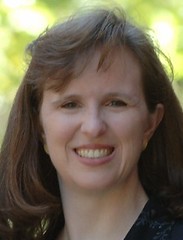
 

Thursday, January 14, 2010

02/09/2010 @ 6:15 p.m.: Wonkak Kim, clarinet


Award-winning clarinetist Wonkak Kim has dazzled audiences with playing that is “virtuosic and stirring” (Journal de Morges, Switzerland). Collaborating with Mr. Kim is pianist Grace Eun-Hye Choi.

Program Selections
  • Gioacchino ROSSINI : Introduction, Theme and Variations (1812)
  • Edward LEIN : September
  • Alban BERG : 4 Stücke, Op. 5
  • François DEVIENNE : Sonata in E-flat, Op. 28, No. 2
  • Charles-Marie WIDOR : Introduction et Rondo, Op. 72


    Hailed by critics around the world as “excellent” (The Washington Post) and as a “tour de force” (Classical Voice of North Carolina), clarinetist Wonkak Kim has quickly established himself at the forefront of his generation, concertizing throughout the United States, Costa Rica, South Korea and Europe. Mr. Kim, who began studying clarinet with Kenneth Lee at the age of fifteen, has been a featured soloist with more than a dozen orchestras, performing concertos by Mozart, Nielsen, Spohr, Weber, and Copland. As a prizewinner of numerous national and international competitions, he has appeared in Carnegie Hall, the Kennedy Center, German Embassy in Washington D.C., and Constitution Hall.

    Kim is frequently in demand as a soloist and chamber musician music festivals and artist series, including the Promising Artists of the 21st Century (San Jose, Costa Rica), OK Mozart Festival, William S. Newman Artist Series, Cours International de Music (Morges, Switzerland), Chapel Hill Chamber Music Workshop, Fantasia Cultural Management (Seoul, South Korea) and COEX Artist Series (Seoul, South Korea). He has also performed as a guest principal clarinetist with the Tallahassee Symphony, Albany Symphony (Albany, Georgia), and Sinfonia Gulf Coast Orchestras (Destin, Florida).

    An avid chamber musician, Kim is a founding member of enhakē, top-prize-winner of the Yellow Springs Chamber Music Competition (2009), International Chamber Music Ensemble Competition (2008) and the Plowman Chamber Music Competition (2008), which recently made a highly acclaimed debut at Weill Recital Hall (NYC). Kim recently commissioned a work from renowned American composer Libby Larsen, which will be premiered in Carnegie Hall in 2010.

    Keen to exploit his artistic talent, Kim has worked with various media to explore new aspects of classical music and visual arts, including a collaboration with Nuria Schoenberg Nono in Arnold Schoenberg: Photo Album with Music (2004) held in Chapel Hill, North Carolina, an appearance in Classical Music and Paintings (2005) broadcast by PBS in South Korea, and with the Tallahassee Ballet Company in its annual production of An Evening of Music and Dance.

    As an educator and clinician, Kim has given lectures and master classes at Florida State University, Valdosta State University (Valdosta, GA), Mesa State College, University of North Carolina at Chapel Hill, University of Costa Rica, and the National Superior Institute of Music (Costa Rica). As a member of enhakē, Kim is an artist-in-residence of the Tallahassee Youth Orchestra and actively participates in local educational outreach program.

    Kim holds degrees in Mathematics (BA) and Music (BM) from The University of North Carolina at Chapel Hill with full scholarship. He received a Master of Music in Clarinet Performance at Florida State University as a Teaching Assistant to Dr. Frank Kowalsky, where he was nominated for the University’s Outstanding Teaching Assistant Award for the 2007-8 academic year. Currently a Doctoral candidate at FSU, his major teachers have been Donald Oehler and Frank Kowalsky.

    Korean pianist Grace Eun-Hye Choi began playing the piano at the age of six. Choi has won several competitions in her native country and performed extensively as a collaborative pianist, including at the Hi Seoul Festival, COEX Arts Center, National Theatre of Korea, among many other venues. Recently her performance at the Hot Springs Music Festival was broadcasted on NPR’s Performance Today, and she has been invited to serve as a staff accompanist at the Interlochin Academcy’s Summer Arts Camp. Choi studied piano with Andreas Ehret and composition (BM) with Ji-Sun Lim and In-Yong La at Yonsei University in Korea. She is currently completing her Master’s degree in piano accompanying at Florida State University, studying under Dr. Carolyn Bridger.

    PROGRAM NOTES by Ed Lein, Music Librarian
    By 1829, when Gioacchino Rossini (1792-1868) retired after the premiere of Guillaume Tell, his 39th opera, he had become the most popular composer in the history of music for the stage, and his Il barbiere di Siviglia (The Barber of Seville, 1816) retains its place as one of the most frequently staged Italian operas. In Introduction, Theme and Variations (or, Andante e Tema con variazioni, 1812), the second of his two early sets of variations featuring the clarinet, Rossini follows the introductory section with a lively melody and its five variations to showcase the coloratura capabilities of the clarinet in precisely the same manner he would showcase a singer—Rossini reused the tune in the cavatina for “Malcolm” in his 1819 opera, La donna del lago.

    CLICK HERE for a performance on YouTube of the original version with orchestra.

    Florida native Edward Lein (b. 1955) is the Music Librarian at Jacksonville Public Library's Main Library, and holds Master's degrees in both Music Theory and Library Science from Florida State University. As a tenor soloist he appeared in recitals, oratorios and dramatic works throughout his home state, and drawing on his performance experience the majority of his early compositions are vocal works. Following peformances of pieces by the Jacksonville Symphony, including Meditation for cello, oboe and orchestra (premiered June 2006) and In the Bleak Midwinter (premiered December 2007), his instrumental catalog has grown largely due to requests from Symphony players for new pieces. September (2008, dedicated to Music @ Main volunteer Betsy Ferraro) is a straightforward arrangement of a song composed on a text by American poet Carlos Wilcox (1794-1827), that begins, “The sultry summer past, September comes, Soft twilight of the slow-declining year.” The sustained lyricism of the music, essentially a waltz sandwiched between a contemplative introduction and its reprise, aims to capture the poet’s Romantic mixture of melancholy reflection and awestruck wonder, as the fading summer gives way to shorter days amid the glittering beauty of fall foliage mirrored in a mountain creek.

    CLICK HERE for the complete text of the "September" poem and to hear a recording.


    The Austrian Alban Berg (1885-1935) is one of few composers of predominantly “atonal” music (i.e., music that deliberately avoids musical scales and harmonies centering around a specific keynote) who has sustained a following among the concert-going populace, particularly with his ground-breaking operas, Wozzeck (1922, the first full-length atonal opera) and Lulu (1935, the first 12-tone opera), and his moving Violin Concerto (1935). According to social philosopher Theodor Adorno (1903-1969) who studied music composition with Berg in the 1920s, Berg’s atmospheric and freely-atonal Vier Stücke, Op. 5 (“Four Pieces,” 1913), might be regarded as a condensed version of the four-movement sonata archetype as brought to fruition by Beethoven, with Berg’s 7½-minute version appearing “in rudimentary, shriveled form,” and “everywhere and immediately creating, shattering, abandoning, reintroducing, and rounding off remnants” of its musical motifs. It is perhaps easy to suppose that Beethoven (had he been around and not deaf) might have slapped the budding composer for such a conceit, but it is surprising that Arnold Schoenberg (1874-1951), Berg’s teacher and adopted father-figure, apparently gave his pupil a brow-beating for not producing more extended compositions, especially since Schoenberg’s own brief piano works served as a model for Berg’s Pieces. Berg took the criticism to heart and abandoned miniature forms in favor of large-scale works, ultimately demonstrating a communicative power his mentor’s own atonal oeuvre has proven unable to match.

    CLICK HERE for a performance on YouTube.

    French composer François Devienne (1759-1803) joined the Paris Opéra orchestra in the fall of 1779 as its last-chair bassoonist, but over the course of just a few years he had become something of a fixture at the famous Lenten Concert Spirituel series, as composer and as featured soloist on both flute and bassoon. By 1792 he was well established as a flute teacher, and was appointed as flute professor and an administrator at what became the Paris Conservatoire. He penned an influential method for flute performance (1794), and he became famous as an opera composer, especially for Les visitandines (1792) which enjoyed over 200 performances during its first 5 years. Many of Devienne’s 500-plus compositions were published during his lifetime, and as might be expected these include an impressive body of works featuring flute and bassoon. According to New Grove, Devienne’s 12 Sonatas for Clarinet and Continuo were originally for flute, and they exhibit the graceful elegance that has earned him the nickname, “The French Mozart.”


    Charles-Marie Widor (1844-1937) was the preeminent organist in Paris at the turn into the 20th Century, and he taught both organ and composition at the Paris Conservatoire to students including Vierne, Dupré, Honegger, Milhaud, and Varèse, as well as Albert Schweizer with whom he annotated an edition of the organ works of J.S. Bach. Although his output includes operas, symphonies, concertos and a variety of chamber music, as a composer Widor is remembered mostly for his 10 symphonies for solo organ, a form he pioneered, and most especially for the famous Toccata finale of his Organ Symphony No. 5, Op. 42, no. 1. His idiomatic and virtuosic Introduction et Rondo, op. 72, was written in 1898 to fill a request from the Paris Conservatoire for a solo de concours (i.e., solo competition piece) for clarinet with piano. It remains a favorite of accomplished clarinetists, allowing the soloist ample opportunity to showcase both versatility and technique by alternating lyrical melodies with bravura passage work.

    CLICK HERE for a performance on YouTube.

  • Wednesday, July 29, 2009

    9/29/2009 @ 6:15 p.m.: Trio Solis

    CANCELED


    Due to unannounced renovations to the Library's Hicks Auditorium this program has been canceled. Trio Solis hopes to reschedule.


    Founded in 2008, Trio Solis combines three dynamic virtuosi:

        Corinne Stillwell (violin),
        Gregory Sauer (cello), and
        Read Gainsford (piano)

    Since their Music @ Main concert in January 2009, subsequent performances by the faculty artists from Florida State University's College of Music included an engagement at New York's Carnegie Hall in May 2009, where they played the Trio by Pulitzer Prize-winning composer Ellen Taaffe Zwilich with the composer in attendance.

    Join us in welcoming these outstanding artists back to the Library's Hicks Auditorium for an evening of chamber music offerings from the 19th, 20th and 21st centuries!


    PROGRAM SELECTIONS
    BIOGRAPHY RESOURCE CENTER articles for...
  • Jean Françaix
  • Anton Arensky

    Use your Jacksonville Public Library Card number to access the articles from our subscription databases.
    Or Get a free eCard here!
    The eCard allows anyone access to our online services!


  • Jean Françaix
  • Piano Trio (1986) [Jacksonville Premiere]

  •           Jean Françaix in the Library's Catalog

    Edward Lein
  • Rumor (Rumba for Violin and Cello, 2009) [World Premiere]
              Edward Lein in the Library's Catalog

    Anton Arensky
  • Piano Trio No. 1 in D Minor, op. 32 (1894)

  •           Anton Arensky in the Library's Catalog


    Corrine Stillwell
    Corinne Stillwell (violin) earned her degrees from The Juilliard School, where she first enrolled at age ten. A versatile musician, she has appeared in recital at Carnegie's Weill Recital Hall, on the Dame Myra Hess series in Chicago, and as soloist with numerous orchestras across the United States and on tour in Eastern Europe. Her chamber music activities have included performances at Alice Tully Hall, the Chamber Music Society of Lincoln Center, the Kosciuszko Foundation, the Museum of Modern Art, and at the festivals of Aspen, Norfolk, Skaneateles, the Victoria Bach Festival, and the International Festival-Institute at Round Top in Texas. Frequently heard on WXXI-FM public radio, she has collaborated with David Shifrin, Robert Levin, Pepe Romero, members of the Pro Arte and Cavani quartets, and members of the faculty at the Eastman School of Music. She has served as Assistant Concertmaster of the Rochester Philharmonic and prior to that, was a member of the Harrington String Quartet in Amarillo, Texas. In 2007, Ms. Stillwell joined the faculty at Florida State's College of Music, where she is Assistant Professor of Violin.

    TRIO SOLIS


    Greg Sauer
    Praised for his versatility, Gregory Sauer (cello) has appeared in numerous solo recitals, including performances at the Old First Concert Series in San Francisco, the Crocker Art Museum in Sacramento and the Brightmusic Concert Series in Oklahoma City, and numerous chamber music performances have included appearances at Tanglewood, Aspen Music Festival, Santa Fe Promusica, and the Boulder Modern Music Festival, among many others. Greg has performed concertos with the Houston Symphony, Hudson Valley Philharmonic, the Tallahassee Symphony Orchestra, the Quad City Symphony, and Oklahoma City Philharmonic, to name only a few. A Prizewinner in the Hudson Valley Philharmonic and Ima Hogg national competitions, he served nine seasons as principal cellist of the Oklahoma City Philharmonic Orchestra. Mr. Sauer is Assistant Principal Cello of the Colorado Music Festival Orchestra, and, prior to joining the Florida State University music faculty in 2006, he taught at the University of Oklahoma for 11 years, where he was named Presidential Professor in 2005.

    TRIO SOLIS


    Read Gainsford
    Read Gainsford (piano) has performed widely in the USA, Europe, Australia, South Africa, and his native New Zealand as solo recitalist, concerto soloist and chamber musician. He has made successful solo debuts at the Wigmore Hall and Carnegie Hall's Weill Recital Hall, and has performed in many other prestigious venues, including the Kennedy Center, Queen Elizabeth Hall, Barbican Centre, Fairfield Halls, Birmingham Town Hall and St.-Martin-in-the-Fields. Dr. Gainsford has recorded for the Amoris label, BBC Radio Three, Radio New Zealand's Concert Programme, and has broadcast on national television in New Zealand, the UK, and Yugoslavia. Since moving to the United States in 1992, Read has been a guest artist for the American Music Teachers Association, has appeared at the Gilmore Keyboard Festival and the Music Festival of the Hamptons, and has spent several summers at the Heifetz International Music Institute. He is a member of the contemporary music group Ensemble X, and also the Garth Newel Chamber Players. Formerly on the faculty of Ithaca College where he received the college-wide Excellence in Teaching Award in 2004, Dr. Gainsford became Associate Professor of Piano at FSU in 2005.

    TRIO SOLIS


    Program Notes by Ed Lein, Music Librarian


    Jean Françaix (1912-1997)
    Trio for Violin, Cello and Piano (1986
    )
        I. [No designation] -- II. Scherzando -- III. Andante -- IV. Allegrissimo

    Although the parents of French composer, orchestrator and concert pianist Jean Françaix were professional musicians -- his father directed the Le Mans music conservatory and his mother was a singer and vocal coach -- the musical talents of such a precocious youngster likely would have been obvious to just about anyone. Young Jean began composing at age six, and by 10 he had become a published composer. At this point his exceptional talent was brought to the attention of Nadia Boulanger, the extraordinarily gifted teacher who mentored some of the greatest musical talents of the 20th Century, ranging from Aaron Copland, Elliott Carter and Ástor Piazzolla to Burt Bacharach and Quicy Jones, and even among such luminaries Boulanger considered Françaix to be one of the most naturally gifted composers she had worked with. Françaix, who remained an unapologetic neoclassicist throughout his long career, never ceased adding to his catalog of over 200 compositions in virtually all forms (including operas and film scores), finishing his last completed work less than four months before his death.

    Written when Françaix was in his 70s, his sparkling Piano Trio received its first performance at the 1987 Cheltenham Festival in England, and (as best we can tell) this (its latest performance!) is the Jacksonville premiere. At times reminiscent of Poulenc and Shostakovich, the Trio demonstrates the composer's witty, eclectic style, and shows that he never lost his youthful energy and playfulness.

  • Françaix's Trio on YouTube (end of mvt. III. -- all of IV.)

    TRIO SOLIS


    Edward Lein (b. 1955)
    Rumor: Rumba for Violin and Cello


    Edward Lein, a native of Fort Pierce, Florida, is the Music Librarian for Jacksonville Public Library, holding Master's degrees in both Music and Library Science from Florida State University, and as a tenor soloist (now retired) he appeared in recitals, oratorios and dramatic works throughout his home state. Drawing on his performance experience the majority of his earliest compositions were vocal works, including Missa pro defunctis (Mass for the Deceased, 1991), first performed by Riverside Presbyterian Chancel Choir with members of the Jacksonville Symphony Orchestra. Following premieres by the Jacksonville Symphony of his Meditation, for Cello, Oboe and Orchestra (2006) and In the Bleak Midwinter (2007), his instrumental catalog has grown, largely due to requests from Symphony players for new pieces. He endeavors to imbue his instrumental works with a singing lyricism similar to that of his vocal works.

    Rumor is the last movement of a four-movement suite called Un Dulcito ("A Little Sweet"), mimicking the Latin American ballroom dances that inspired them, and the composer is delighted to have such distinguished artists give the premiere performance of his little rumba (rumbita?). The entire suite grew from Tangle, a tango written in March 2009 at the request of Jacksonville Symphony players Piotr Szewczyk and Alexei Romanenko, and both Rumor and Hoodoo (the first movement samba) include variations of the tune from Tangle. Adapted for string orchestra, Un Dulcito is scheduled for its first complete performance this fall by the Vero Beach High School Symphony.

  • MP3 of Lein's Rumor on the composer's website.
  • CLICK to download a PDF file of the complete score of Un Dulcito (String Orchesra version)

    TRIO SOLIS


    Anton Arensky (1861-1906)
    Piano Trio No. 1 in D Minor, op. 32 (1894)

    I. Allegro moderato -- II. Scherzo (Allegro molto) -- III. Elegia (Adagio) -- IV. Finale (Allegro non troppo)

    Russian composer, pianist, conductor and teacher Anton Arensky is of the generation between Rimsky-Korsakov (his teacher) and Rachmaninoff and Scriabin (his students). Nurtured by his parents who were both amateur musicians, by the time he was nine Arensky was already composing songs and piano pieces. He began studies at the St. Petersburg Conservatory in 1879, and upon being graduated with the Gold Medal in 1882 he immediately joined the faculty of the Moscow Conservatory, a marked distinction for a 21 year old. In Moscow he received friendly encouragement from Piotr Tchaikovsky, whose own international musical style had the greatest impact on Arensky's development as a composer, and, incidentally, whose brother Modest provided the libretto for one of Arensky's three operas. Arensky resigned his professorship in 1895 to return to St. Petersburg as director of the Imperial Chapel until 1901. The last five years of his life were spent composing and touring as a successful concert pianist and conductor, but Arensky had the reputation as an overactive drinker and gambler, and these addictions greatly undermined his health. He died from tuberculosis in a Finnish sanatorium a few months before his 45th birthday.

    Not long after Arensky's passing, Rimsky-Korsakov wrote in his memoirs that Arensky would be "soon forgotten" because he found the style of his former student to be too derivative of Rimsky himself and of Tchaikovsky (the latter influence is much greater than the former). Nonetheless, Arensky's works are now becoming more familiar as new recordings of his works are made available, and his Piano Trio No. 1, Op. 32, has retained its place in the repertoire and remains his most frequently performed extended composition. According to allmusic.com, this Trio has been released on at least 33 recordings, compared with only four released of Rimsky-Korsakov's Piano Trio. (In fairness, it should be mentioned that Rimsky-Korsakov's Trio was completed after his death by his son-in-law, composer Maximilian Steinberg, but even his most popular chamber work, the 1876 Quintet for piano, flute, clarinet, horn and bassoon, has only 12 recordings listed.)

    Arensky's Piano Trio No. 1 was written in memory of cellist Karl Davidov, who had been director of the St. Petersburg conservatory while Arensky was a student there. The cello is featured prominently, no doubt in honor of Davidov, but it has been suggested perhaps also as a tribute to Arensky's father who likewise played the cello. Apparently using Mendelssohn's Piano Trio No. 1 in D Minor, op. 49, as a model, Arensky's Trio demonstrates his lyrical gifts as well as his deftness in organizing convincing musical discourse.

  • Arensky's Piano Trio on YouTube
  • CLICK to download a PDF file of the complete score and parts

    TRIO SOLIS


  •