Showing posts with label Music at Main. Show all posts

Friday, October 12, 2012

Promenade! Art Walk Concert, 1/2/2013 @ 7 p.m.


Boyan Bonev, cello

Shaun Bennett, horn 

Austin Clark, piano

Katherine Adams, piano

  • BACH: Suite for Solo Cello No. 1 in G major, BWV 1007
  • MOZART: Horn Concerto No. 3 in E-flat major, K. 447
  • MOZART: Piano Sonata No. 16 in C Major, K. 545
  • CASSADO: Suite for Solo Cello
  • MOZART: Piano Fantasia No. 3 in D Minor, K. 397

Bulgarian cellist Boyan Bonev has participated in numerous master classes and music festivals in the United States and Europe. An active performer of solo and chamber music, Dr. Bonev has taken part in concert and educational programs for the Bulgarian National Television and Radio, and is a prize winner of national and international competitions. He teaches cello and double bass at the University of West Florida, and previously taught at Albany State University and Darton College. He is on the faculty of the Florida State University Summer Music Camps, and he taught cello and chamber music as a Graduate Assistant at FSU while working on his doctorate there. Dr. Bonev performs with the Tallahassee, Pensacola, Mobile, Florida Lakes, and Northwest Florida Symphony Orchestras. He has been a featured soloist with the Florida Lakes Symphony Orchestra and the Stara Zagora Symphony Orchestra, and he has performed at Carnegie Hall (Weill Recital Hall). This program marks his fourth appearance in concerts for Jacksonville Public Library.

Horn player Shaun Bennett is a member of the Coastal Symphony of Georgia in Brunswick, and he is the brass instructor at North Florida Music Academy in Orange Park. He earned his degree in Music Theory and Composition from Jacksonville University, and he also studied at the New Zealand School of Music in Wellington, New Zealand.
Jacksonville native Austin Clark is an Organ Scholar at the Episcopal Church of the Good Shepherd and an accompanist for the Choral Department at the University of North Florida. He attended Douglas Anderson School of the Arts, and is a graduate of Interlochen Arts Academy in Michigan. Mr. Clark is pursuing a degree in Piano Performance at UNF.

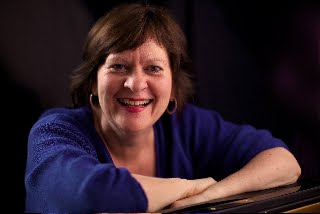
Pianist Katherine Adams began studying piano when she was five years old. She pursued her degree in Piano performance at Jacksonville University, where she was a student of Dr. Scott Watkins. She now resides in her hometown of Brunswick, Georgia, where she is a church musician at The Episcopal Church of Our Savior, Honey Creek. She also maintains a private studio, and teaches voice in addition to piano.


Once dismissed by many of his contemporaries as being too old-fashioned, the works of the great German Baroque master Johann Sebastian Bach (1685-1750) probably have been studied more than those of any other composer, making him perhaps the most influential musician of all time. And among works written for unaccompanied cello there is no doubt that Bach’s six Suites are the best known. Bach’s own manuscripts of the Cello Suites have never been found, but current research suggests that they were composed while Bach was at Cöthen, where he served as Kapellmeister from 1717-1723 in the court of Prince Leopold (1694-1728), and that they pre-date Bach’s well-known Sonatas and Partitas for Solo Violin, which were written in 1720. All six of the Cello Suites follow a standard six-movement pattern, but with the fifth movement dance types varying among minuets (in Suites 1, and 2) bourrées (in 3 and 4), and gavottes (in 5 and 6). Among all 36 movements of the six Suites, the popular Prelude from Suite No. 1 has had the most exposure: it’s been used as background music in television commercials hyping everything from sports cars and insurance to dog food.


Austrian-born Wolfgang Amadeus Mozart (1756–1791), unquestionably one of the greatest composers in history, began his career as a 6-year-old piano prodigy touring Europe with his father (Leopold, 1719-1787) and sister (Maria Anna, or "Nannerl," 1751-1829), and he absorbed and mastered all the contemporary musical trends he was exposed to along the way. When Mozart reached the ripe old age of 7, he made the acquaintance of Joseph Leutgeb (1732-1811), one of his father's colleagues and a leading horn virtuoso of the day. Leutgeb remained a lifelong friend, and Mozart wrote his four horn concertos specifically for Leutgeb; the autograph copies of the solo horn parts even include personal messages from the composer to the performer.  The four horn concertos date from the last eight years of Mozart's short life, beginning with "No. 2" in 1783, and ending with "No. 1" in 1791, not long before his death. Mozart kept a catalog of his works, but it did not include what we know as Horn Concerto No. 3, K. 447 (it may have been second in order of composition). So exactly when it was completed is not known, but the mid-1780s is the likely timeframe. All four concertos have held places in the repertoire of virtually all professional horn players, and they certainly attest to the skill of Herr Leutgeb--the piston and valve horn we have today had not yet been invented, so performance on the "natural" horn requires a prodigious amount of hand and lip manipulation to play any tones outside the instrument's natural harmonic series.

Mozart’s graceful and charming Piano Sonata No. 16 in C major, K. 545, is likely the one that first comes to mind when his 18 works in the genre are mentioned. Despite its present-day popularity, the Sonata, dating from 1788, remained unpublished while Mozart was alive, not appearing in print until 1805. The clear-cut themes and formal structure are about as “Classical” as you can get, but the first movement sonata-form (i.e., using an "exposition-development-recapitulation" structure) boasts one anomaly: the recap begins in F major (the subdominant key) rather than in the expected home key of C major. Schubert and other later composers picked up on the idea, but it was very unusual when Mozart used it.

Left unfinished, Mozart’s Piano Fantasia in D minor, K. 397, is thought to have been composed in 1872, around the same time as the Prelude (Fantasy) and Fugue in C major, K. 394, and the Fantasy in C minor, K. 396. The manuscript of the D minor Fantasy ended on a dominant 7th chord, and Mozart originally may have planned to follow it with a fugue, as in K. 394. It was first published in its original, incomplete form in 1804, but a new edition came out two years later that included an additional 10 measures added by the publisher so the work could be performed without leaving the audience hanging. Comprised of three contrasting sections, The Fantasy has become one of Mozart’s most popular piano pieces. It opens with an Andante section reminiscent of Baroque-era preludes, replete with arpeggios. The second section, the longest of the three, is a melancholy Adagio that is interrupted by a couple of unmeasured cadenzas, and the final section is a spritely Allegretto in D Major.


By virtue of a scholarship from his hometown of Barcelona, Spain, a nine-year-old Gaspar Cassadó (1897-1966) was able to accept an invitation to study in Paris with the legendary Catalan cellist Pablo Casals, where, in addition to his cello lessons, Cassadó studied composition with both Manuel de Falla and Maurice Ravel. After World War I, Cassadó began a successful international career as both cellist and composer, including several concerts with Casals. During the1920s Cassadó settled permanently in Florence, Italy, and after World War II his reputation and career, not to mention his personal morale, suffered tremendously when his mentor unjustly accused him of sympathizing with Mussolini’s fascist regime, despite Cassadó’s continuing friendship and collaboration with perhaps the most vocal of Italy’s anti-fascist composers, Luigi Dallapicolla. The rift between teacher and protégé was finally reconciled during the mid 1950s through the efforts of a mutual friend, the British violinist Yehudi Menuhin, but Cassadó’s career never fully recovered.  

The 1926 Suite for Solo Cello remains one of Cassadó’s best known works. Its modal inflections and folk-dance rhythms attest to the composer’s Catalan heritage, and the rhapsodic first movement acknowledges other influences, with direct references to Zoltán Kodály’s Sonata for Solo Cello, Op. 8, and Ravel’s ballet, Daphnis et Chloe.


Saturday, September 8, 2012

Promenade! Art Walk Concert, 02/06/2013 @ 6pm

Jacksonville University Chamber Strings
Dr. Marguerite Richardson, director

PLEASE NOTE THE EARLIER-THAN-USUAL START TIME!

  • Handel: Concerto Grosso in G major, opus 6, no. 1
  • Faure: Elegy (Dr. Shannon Lockwood, violoncello)
  • Mozart: Divertimento in D, K.136
  • Mascagni: Intermezzo (from Cavalleria Rusticana)
  • Mendelssohn: Sinfonia No. 2 in D[selection cancelled]
  • Szewczyk: Rebirth of Hope
  
Jacksonville University is a comprehensive, private university with more than 70 respected academic programs that attract nearly 3,000 students from all over Florida, across the nation, and around the world. Working closely with a distinguished faculty of professional performing artists and researchers, students can focus and refine their skills while deepening an appreciation for the musical arts. Music students at Jacksonville University may pursue a Bachelor of Arts (B.A.), Bachelor of Fine Arts (B.F.A.), Bachelor of Music (B.M.), Bachelor of Music Education (B.M.E.), or a Bachelor of Science (B.S.).
Violin 1
Edward Latimer          
Jonathan Lindsay      
Laytan Gornoski
Yelena Sakara

Violin 2
Breanne Wilder          
Meaghan Frick
David Reynolds
Joseph Schmidt
Viola
Jacob Campbell
Antoni DiGeorgio
Cello
Joseph Engel
David Greene
Grace Han
Bass
Peter Mosely
Cody Wheaton
Keyboard
Dr. Scott Watkins, guest keyboardist

Dr. Shannon Lockwood (DMA, University of Cincinnati) is Adjunct Applied Instructor (violoncello) at JU. She is an avid performer as soloist, chamber musician, and orchestral musician throughout the United States, England, and France, and was the principal cellist of the Richmond Indiana Symphony Orchestra.


Dr. Marguerite Richardson joined the faculty of Jacksonville University in 2007, where she is Assistant Professor of Strings and Music Director of the JU Orchestra, and, prior to her appointment at JU, Dr. Richardson founded the string program at the University of North Florida. She has been a member of the Jacksonville Symphony Orchestra since 1990, and is Associate Conductor of the Jacksonville Symphony Youth Orchestra. Dr. Richardson regularly performs both as a soloist and chamber musician, including recitals this past summer in China, where she was a Visiting Foreign Scholar and Visiting Professor.


Along with J.S. Bach (1685-1750) and Antonio Vivaldi (1678-1741), George Frideric Handel (1685-1759) is widely regarded as among the most significant composers of the Baroque era, and certainly his Messiah is one of the most-performed works of all time.  Handel was born in Germany but became a British subject in 1727, and it was from his naturalized home in London that he gained fame as a composer, primarily for his operas and oratorios. Among his instrumental works, both Water Music and Music for the Royal Fireworks remain great favorites. The 18 concerti grossi that comprise his Opus 3 and Opus 6 are not as well-known, but they nonetheless provide some of the finest examples of the genre. All of Handel's 12 Concerti Grossi, Op. 6 were composed in less than a month in the fall of 1739, and primarily were written to serve as interludes during performances of his oratorios and other choral works.   

Gabriel Fauré (1845-1924) was a composer, organist, pianist and teacher, and he is widely regarded as the foremost French composer of his generation. Although Fauré greatly admired Wagner he remained relatively free of Wagner’s highly-colored influence, and instead led his own harmonic revolution by treating chords with added 7ths and 9ths as consonant and by introducing modal inflections into an essentially diatonic framework; in the process he successfully bridged the styles of Saint-Saëns (his teacher) and Ravel (his student). Among Fauré's best-known works is the hauntingly beautiful choral Requiem, and his songs and chamber music also have a devoted and well-deserved following.  Composed in 1880 for cello and piano, Fauré's Élégie, Op. 24, was first performed publically in 1883 by cellist Jules Loëb (1852-1933), to whom the piece is dedicated. The piece remained so popular that Fauré was asked to create an orchestral version which was published in 1901, and first performed that same year with the legendary Pablo Casals (1876-1973) as soloist.

Austrian-born Wolfgang Amadeus Mozart (1756–1791), unquestionably one of the greatest composers in history, began his career touring Europe as a 6-year-old piano prodigy.  From this early beginning he absorbed and mastered all the contemporary musical trends he was exposed to along the way, and by the end of his short life he left posterity with over 600 works.  Mozart basically was still a 16-year-old "apprentice" composer when he wrote the  Divertimento in D, K.136.  It is the first of the three works (K. 136-138) that are sometimes referred to as the "Salzburg Symphonies," because he was employed as court musician in Salzburg during in the winter of 1772 when they were written.  It is unclear from his manuscript whether Mozart intended them for string quartet or string orchestra, and the title"divertimento" was added by a hand other than Mozart's.  Unlike the composer's mature Divertimentos and Serenades for winds and strings which typically have at least 6 movements, these Salzburg string-only works have just three movements. By this point in his career Mozart had already spent time in Italy, and would soon return, so it is not surprising that he seems to have patterned them after the Italian sinfonia, works typically in a fast-slow-fast, three-movement pattern.

Italian composer and conductor Pietro Mascagni (1863-1945), a classmate of Puccini at the Milan Conservatory, rocketed to international fame following the 1890 premiere of Cavalleria rusticana (Rustic Chivalry). Although he wrote more than a dozen subsequent operas, Mascagni was never able to duplicate the same level of international success he achieved with the one-act verismo opera of betrayal and revenge that assures the composer his continuing place in opera history. The orchestral Intermezzo comes just prior to the opera's climactic final scene, and it gained wide-spread exposure among non-opera goers when film director Martin Scorsese used it to open his 1980 bio-pic, Raging Bull, now widely regarded as one of the greatest films ever made.

Felix Mendelssohn (1809-1847) was a German composer, pianist, organist and conductor whose prodigious musical talents rivaled those of Mozart, and who, like Mozart, did not live to see his 40th birthday. Through the course of his career Mendelssohn became something of a superstar performer and composer, especially in Great Britain where he was a particular favorite of Queen Victoria. His musical legacy includes the well-known "Scottish" and "Italian" Symphonies, his often-performed and recorded Violin Concerto, and Elijah, which is surpassed only by Handel's Messiah in popularity among large-scale sacred oratorios. At sixteen, Mendelssohn produced his first masterwork, the Octet for Strings, Op. 20, and the following year saw the completion of the brilliant A Midsummer Night’s Dream concert overture (Op. 21) -- so, in terms of achieving his musical "maturity," Mendelssohn surpassed even Mozart.  Between the ages of 12 and 14 young Felix composed a dozen symphonies for string orchestra as student exercises, at first mimicking 18th-Century formal procedures.  Working  under the guidance of composer Carl Friedrich Zelter (1758-1832), the 12-year-old Mendelssohn wrote the first seven of his 12 Sinfonias for strings in 1821.  Like the others in this early group, Sinfonia No. 2 in D major (MWV N.2) follows a 3-movement, fast-slow-fast outline, apparently taking as a model works by J.S. Bach's son, Carl Philipp Emanuel Bach (1714-1788).  

Polish-born violinist and composer Piotr Szewczyk (b. 1977) joined the Jacksonville Symphony Orchestra in 2007. He has appeared as soloist with numerous orchestras and ensembles, and performs frequently in solo and chamber recitals, including appearances in the United States, Poland, Germany and Austria. Szewczyk's works have won a number of national and international composition prizes, including the Jacksonville Symphony Orchestra’s 2008 Fresh Ink competition, and his music has been featured on the CBS Early Show and NPR's Performance Today. The elegiac Rebirth of Hope was composed in 2005 in response to the Indian Ocean Tsunami, which, on December 26, 2004, claimed the lives of over 230,000 people in 14 countries, making it among the worst natural disasters in recorded history.
  • Rebirth of Hope (EXCERPT) on YouTube


  • Friday, September 7, 2012

    Promenade! Art Walk Concert, 12/05/2012 @ 7pm

    MinYoung Cho, violin
    Boyan Bonev, cello
    Eun Mi Lee, piano

    • MOZART: Trio in B-flat Major for Piano, Violin and Cello, K.502
    • PIAZZOLLA: The Four Seasons of Buenos Aires
    • SHOSTAKOVICH: Trio No.2 in E Minor for Piano, Violin and Cello, Op.67

    Dr. MinYoung Cho is a native of Seoul, Korea, and she has performed with many orchestras in her homeland, including the Korean-American Youth Orchestra, Gwacheon Youth Orchestra, Seoul National Symphony Orchestra, Korean Philharmonic Orchestra and Gangneung Philharmonic Orchestra. Her talent as an ensemble player remains much in demand, and she often serves as concertmaster or assistant concertmaster for many of the orchestras she plays with. She regularly performs with a number of chamber and symphony orchestras in North Florida, including Tallahassee Bach Parley, Tallahassee Symphony Orchestra, Northwest Florida Symphony Orchestra and Sinfonia Gulf Coast, as well as with the Pensacola Symphony Orchestra and Panama City Pops Orchestra. As a guest solo artist, recent recital engagements have included appearances at Chipola College (Marianna, Florida) and Valdosta State University (Valdosta, Georgia).

    As a winner of the American Fine Arts Festival earlier this year, Dr. Cho performed at Carnegie Hall (Weill Recital Hall), and also was awarded an AFAF Summer Music Courses in Europe scholarship. Other competition wins include the Korea Music Competition, the Chungbu Conservatory Competition, and the Music World Newspaper Company’s Competition. Dr. Cho received her Bachelor of Music degree from Dankook University in Korea, and both her master's and doctoral degrees from Florida State University, where she also has taught as a Graduate Assistant. Her principal teachers have included Corinne Stillwell, Karen Clarke and Daesik Kang.

    Bulgarian cellist Boyan Bonev has participated in numerous master classes and music festivals in the United States and Europe, including Florida Music Educators’ Association Conference, Varga Celebration, Seven Days of Opening Nights, March Music Days, and Varna Summer. An active performer of solo and chamber music, Dr. Bonev has taken part in concert and educational programs for the Bulgarian National Television and Radio, and is a prize winner of national and international competitions. He has been a featured soloist with the Florida Lakes Symphony Orchestra and the Stara Zagora Symphony Orchestra, and he has performed at Carnegie Hall (Weill Recital Hall). He was featured twice in Jacksonville Public Library's Intermezzo Sunday Concert Series, in March 2011 with pianist Hristo Birbochukov, and in March 2012 as a member of the Flint River Trio.

    Dr. Bonev teaches cello and double bass at the University of West Florida, and previously taught at Albany State University and Darton College. He is on the faculty of the Florida State University Summer Music Camps, and he taught cello and chamber music as a Graduate Assistant at FSU. Dr. Bonev performs with the Tallahassee, Pensacola, Mobile, Florida Lakes, and Northwest Florida Symphony Orchestras.

    In her native South Korea, Eun Mi Lee received a Bachelor of Music degree in Piano from Ewha Women’s University, and a Master of Music degree in Piano Accompanying on scholarship at Sungshin Women’s University. A passionate accompanist and teacher, she has worked with faculty artists and student performers at Baekseok Conservatory, Muyngji University, and University of Seoul, and she has been a member of Korea Collaborative Pianists Association since 2002.

    In 2007, Ms. Lee was accepted into the Master’s program in Florida State University's College of Music, working closely with Valerie M. Trujillo, the Grammy-nominated associate professor of vocal coaching and accompanying. Much in demand as a collaborative artist, Ms. Lee has pursued an interest in performing new music, and recorded Soo Jin Cho's 2-piano work, Exodus, released by the Society of Composers, Inc., in March 2010, on an album entitled Mosaic. Eun Mi Lee is currently a doctoral candidate at FSU.

    PROGRAM NOTES by Edward Lein, Music Librarian

    MOZART: Piano Trio in E Minor, K. 502 [PDF Score]
    On YouTube: 1. Allegro | 2. Larghetto | 3. Allegretto

    Austrian-born Wolfgang Amadeus Mozart (1756–1791), unquestionably one of the greatest composers in history, began his career touring Europe as a 6-year-old piano prodigy, and he absorbed and mastered all the contemporary musical trends he was exposed to along the way. Mozart is seldom, if ever, called “The Father of the Modern Piano Trio,” but he well might be as he was the first composer to treat the violin and cello as partners independent of the keyboard.  Earlier works for the ensemble, and even those by Haydn written after Mozart had died, mostly relegated the strings as optional parts that merely doubled and reinforced the piano or harpsichord, which was still a popular household instrument among amateur players.  Mozart wrote the first three of his six piano trios in the summer of  1786, and the rest in 1788. The B-flat major Piano Trio, K. 502, was the third one composed, and it is considered his finest—most of the others were intended for amateur musicians, whereas he intended to perform this one himself. It is one of the few works for which his working sketches survive, and from them it is clear that he took the challenge of achieving the proper balance among the instruments very seriously. But, of course, being Mozart there is little wonder that he succeeded so perfectly. 

    PIAZZOLLA: Cuatro Estaciones Porteñas
    On YouTube: Primavera Porteña | Verano Porteño | Otoño Porteño | Invierno Porteño

    Ástor Piazzolla (1921-1992) pretty much single-handedly reinvented the Argentine national dance, the tango, transforming it into a new style aptly called nuevo tango ("new tango"). Born in Argentina, Piazzolla spent most of his childhood in New York City, where he was exposed to American jazz. When he returned to Argentina in 1937 he played with some of the leading dance bands, and he began studying with noted composer Alberto Ginastera (1916-1983).  In 1953 Piazzolla won a grant to study in Paris with legendary teacher Nadia Boulanger (1887-1979), who found Piazzolla's music well-crafted but  derivative. But when she finally got him to show her some of the music he wrote for his cabaret band, she convinced him to toss out his other works and concentrate on what was uniquely his own. He returned to Argentina in 1955, introducing his "new tango” which infused traditional elements with characteristics of jazz and techniques adapted from his classical studies. It is estimated that he composed over 3,000 pieces, and he recorded about 500 of them himself.  Although perhaps inspired in some way by Vivaldi’s famous concertos, the movements of Piazzolla’s Cuatro Estaciones Porteñas (The Four Seasons of Buenos Aires) originally were not conceived as a suite. The Spring movement was composed in 1965, Autumn in 1969, and Summer and Winter both in 1970, and they were originally scored for violin (viola), piano, electric guitar, double bass and bandoneón. The piano trio version is by José Bragato (b.1915), a cellist who often performed with Piazzolla.


    SHOSTAKOVICH: Piano Trio No. 2 in E minor, Op. 67
    On YouTube: I. Andante.  II. Allegro non troppo.  -
    III. Largo.  -  IV. Allegretto - beginning / - ending

    Joining Prokofiev and Khachaturian, Dmitri Shostakovich (1906-1975) is one of few composers of the former Soviet Union to sustain a large following in the West, but his career was far from “smooth sailing.” During his lifetime his music was periodically banned by Stalinist authorities, so he withheld his more personal works until after Stalin’s death in 1953. Shostakovich likewise has had detractors among many of the West’s avant-garde musicians who wielded their own brand of artistic totalitarianism, dismissing works by any who used tonal idioms to communicate directly with listeners. Ignoring the ideological tyranny on both fronts, performers and listeners have always embraced Shostakovich’s music, and he remains among the most frequently performed and recorded 20th-Century composers. Written in 1944 while the world was at war, Shostakovich’s Piano Trio No. 2, Op. 67, definitely falls into the “personal” category. Not only does it encapsulate the tragedy of war, beginning with an other-worldly fugue and ending with a klezmer-like dance of death, but it also became reflective of the composer’s immediate grief: the Trio is dedicated to the memory of Ivan Sollertinsky (1902-1944), a musicologist and close friend of the composer who died of a heart attack during the time that Shostakovich was writing the work.


    Monday, June 18, 2012

    Promenade! Art Walk Concert, 05/1/2013 @ 7pm

    Faculty Artists from Albany State University

    Ken Trimmins, trumpet
    Mimi Noda, piano

    • PAUL VIDAL : Aria et Fanfare
    • JOHANN BAPTIST GEORG NERUDA : Concerto
    • HENRI TOMASI : Triptyque
    • RICHARD PEASLEE : Nightsongs  
    Dr. Ken Trimmins is a dynamic and versatile trumpet player, composer and educator who excels in both jazz and classical genres. He recently completed a distinguished 23-year career with the United States Air Force Band, serving as director of operations, musical director and band leader for a number of touring ensembles. As a trumpet soloist, he has been a cultural ambassador for the U.S. Department of State, and his broadcast performances have include appearances on BET Jazz and The Tonight Show with Jay Leno. Dr. Trimmins holds degrees from Valdosta State University (BA), Mercer University (MM), and FSU (DMA), and has studied with a number of world-renowned artists, including jazz great Bobby Shew, Willie Thomas, Vincent DiMartino, and former Atlanta Symphony principal trumpeter Jim Thompson. Ken Trimmins is the trumpet instructor at Albany State University (Albany, Georgia), and previously served on the faculty of Armstrong Atlantic State University, in Savannah. As a jazz artist, he performs with The Ken Trimmins Jazz Quartet.

    Dr. Mimi Noda was a collaborative pianist with the Japanese Choral Association before relocating to the United States in 1998 to pursue graduate studies. While earning degrees at the University of Georgia (MM) and Florida State University (DM), she was awarded a number of prizes and scholarships in piano performance, and she also has taught Japanese in FSU’s Department of Modern Languages and Linguistics. In addition to her responsibilities as Assistant Professor at Albany State University, Dr. Noda is a keyboardist with the Albany Symphony Orchestra, and she regularly volunteers keyboard performances at Albany's Phoebe Putney Memorial Hospital. She also enjoys singing as a member of the Albany Chorale.


    PROGRAM NOTES, by Ed Lein, Music Librarian


    French composer Paul Vidal (1863-1931) was a classmate of Claude Debussy (1862-1918) at the Paris Conservatory, and in 1863 Vidal won the coveted Prix de Rome, the year before Debussy won the same composition prize. But unlike his famous friend, Vidal was better known as an opera conductor than as a composer, and he became chief conductor at the Paris Opera from 1906, and was director of the Opera-Comique from 1914-1919. After 1909, Vidal also taught at the Paris Conservatory, where his students included Henri Tomasi (see below), Jacques Ibert (1890-1962) and Nadia Boulanger (1887-1979), the legendary conductor and composition teacher who used Vidal's harmony text as one of her principle pedagogic tools. Not surprisingly, as a composer Vidal was best known for his theatrical and vocal compositions, although these are rarely performed today.  In addition to the Aria et Fanfare (1927), among Neruda's instrumental works featuring cornet or trumpet,  his Concertino (1922) is also sometimes still performed.   

    Little is known about the composer born as Jan Křtitel Jiří Neruda (ca.1707-ca.1780) except that he came from Bohemia (now the Czech Republic), and that he was a violinist and conductor working primarily in Prague and in Germany. In addition to one opera and a number of chamber sonatas and sacred choral pieces, Neruda wrote at least 18 symphonies and 14 concertos. His cello and bassoon concertos are still performed, but the Trumpet Concerto in E-flat is his best-known work. It was composed around 1750, the same year Neruda became the concertmaster of the court orchestra in Dresden, Germany, where he was known by the German translation of his name, Johann Baptist Georg Neruda. The Concerto in E-flat originally was written for the high register of the Corno da Caccia, a valveless hunting horn, but today it is almost always performed on trumpet or cornet.

    Composer and conductor Henri Tomasi (1901-1971) was born in Marseille, France, and entered the conservatory in his hometown when he was 7 years old.  As a youngster he was not very happy being a musician, complaining that his father forced him to perform "like a trained animal" for wealthy families. Despite dreams of running away and joining the navy--and skipping many of his classes--Tomasi won his school's 1916 prize in harmony. This set him up to study at the Conservatoire de Paris, but because of World War I, his entrance there was delayed until 1921. In the meantime he played piano in any place that would hire him, from fancy hotels to low-rent brothels, and, significantly, in movie houses where he began to hone his compositional skills while improvising background music to the onscreen antics of Charlie Chaplin, et al.  In 1925, Tomasi won a prize for a wind quintet, apparently his first "official" composition, and he continued to demonstrate a special affinity for wind instruments throughout his career.  In 1927, and by unanimous vote, he won both the Prix de Rome for composition and the first prize in conducting, and by the 1930s he had established a strong reputation throughout Europe as both composer and conductor. In 1936, he won the Grand Prix du Disque for his recorded performance of Gluck's opera, Orfeo, and, after World War II in 1946, he became the principal conductor for the Opera de Monte Carlo.  He enjoyed success as a composer of operas and other works for the stage, and in 1952 he was awarded the Grand Prix de Musique Française, and in 1960, the Grand Prix musical de la ville de Paris.  Tomasi's Triptyque dates from 1957, about the same time that he had to give up conducting due to failing health and failing hearing in his right ear.

    Richard Peaslee (b. 1930) lives in Seattle, Washington, but he was born in New York City, and  he has written music for numerous theatrical productions in his hometown, as well as in London, England, and Paris, France. In addition to receiving degrees from Yale University and the Juilliard School, he studied in Paris with the afore-mentioned Nadia Boulanger. His concert music has been performed by a number of major orchestras throughout the United States, and Lincoln Center’s Composers’ Showcase presented a career retrospective at Alice Tully Hall. Peaslee has composed for film (e.g., Marat/Sade, 1967) and television, and he received an Emmy nomination for his music to the PBS series, The Power of Myth (1988).   Nightsongs, for flugelhorn and/or trumpet, was written in 1973 to fulfill a commission from trumpeter Harold Lieberman.

    Promenade! Art Walk Concert, 03/6/2013 @ 7pm


    Douglas Anderson School of the Arts Music Students

    Vera Watson, coordinator

    • BEETHOVEN: Sonata No. 13 in E-flat Major "Quasi una fantasia," Op. 27, No. 1.
      -- I. Andante--Allegro--Andante
           Joshua Rentrope, piano
    • HAYDN: Sonata in G Major, Hob. XVI: 40.
      -- I. Allegro innocente
           Stephanie Bird, piano
    • CLEMENTI: Sonatina in C Major, Op. 36, No. 3.
      -- I. Spiritoso
           Kierstyn Granzow, piano
    • KABALEVSKY: A Short Story (30 Pieces for Children, Op. 27, No. 20)
           Matthew Cunningham, piano
    • BROWN: Soliloquy
           Noah Higgins, piano
    • SCHUMANN: Of Foreign Lands and Peoples (Kinderszenen, Op. 15, No. 1)
           Emily Taylor, piano
    • CLEMENTI: Sonatina in G Major, Op. 36, No. 2.
      -- I. Allegretto
           Phillip Hess, piano
    • CHOPIN: Prelude in B minor, Op. 28, No. 6 "Tolling Bells"
           Remy Van Nostrand, piano
    • ROLLIN: Moonlight Nocturne
           Asia Strong, piano
    • DEBUSSY: En bateau ("Onboard boat," Petite suite, No. 1)
           Alyssa Jang & Miranda Caprio, piano 4-hands
    • MOZART: Sonata No. 12 in F Major, K. 332/300k.
      -- III. Allegro assai
           Viann Yu
    • DEBUSSY: Ballet (Petite suite, No. 4)
           Chloe Reynolds & Morgan Stark, piano 4-hands
    • BEETHOVEN: Sonata No. 14 in C-sharp minor "Moonlight," Op. 27, No. 2.
      -- III. Presto
           Ryan Feeney, piano
    • CHOPIN: Nocturne No. 20 in C-sharp minor, Op. posth.
           Sen Valeski, piano
    • CHOPIN: Polonaise in A Major, Op. 40, No. 1 "Military"
           Caleb Webber, piano
    • MAHLER: Piano Quartet in A minor (in one movement)
           Kara Swanson, violin; Benjamin Campbell, viola; Tara Reifnider, cello; Dylan Hewlett, piano
    Recordings of most of these pieces may be heard on our event web page at InstantEncore 
    Douglas Anderson School of the Arts is a Duval County Public School for students grades 9 through 12 with a desire for intensive study in the arts. Established as an arts school in 1985, the school attracts students from all parts of North Florida and South Georgia who have talent in dance, instrumental or vocal music, performance or technical theater, film and video production, creative writing, and visual arts. A high academic standard, coupled with broad arts curriculum, offers students an opportunity to excel in a chosen discipline while preparing them for post-secondary education.
    DASOTA Piano Program In 2000 DA’s Piano program was recognized as the best music program in Northeast Florida and was awarded the Jacksonville Symphony Association’s Harmony Grant. The Piano Department offers serious young pianists a unique opportunity to be in an intensive and varied program and to work with internationally acclaimed guest artists.
    Pianist Vera WatsonVera Watson has been Chair of the Piano Department at Douglas Anderson School of the Arts since 1999. She received her Bachelor's degree and Master of Music with honors from the Russian Academy in Moscow, toured Russia as a recitalist, taught piano and conducting as a graduate assistant, and has published several works on science. Ms. Watson has served as the scholarship chairperson of the Jacksonville Music Teachers Association, as assistant to the president of the Jacksonville District of Federated Music Clubs of America, and has been an adjudicator for various piano competitions. During summer months she teaches at the North Florida Piano Camp held at UNF, and, as a member of the American Guild of Organists, serves as guest conductor at Palms Presbyterian Church. She has National Certification in Piano from the Music Teachers National Association, and is included in Who's Who in American Women and Who's Who in American Teachers.

    PROGRAM NOTES, by Ed Lein, Music Librarian 

    The transcendent German-born composer Ludwig van Beethoven (1770-1827) began his compositional career essentially imitating the styles and forms he inherited from  Haydn, Clementi and Mozart, but during his "middle" period (ca. 1803-1815) Beethoven expanded and personalized this inheritance, creating works that have come to represent the culmination of the Classical style in much the same way that the works of J.S. Bach (1685-1750) represent the culmination of the Baroque. During Beethoven's "late" period (ca. 1815-1827), he discovered new paths toward still more personal, even intimate, musical expression, and, despite the gradual and eventually total degeneration of his hearing, he forged the way beyond the Classical tradition into the Romantic.
    Beethoven composed both Sonata No. 13, Op. 27, No. 1, and Sonata No. 14, Op. 27, No.2, in 1801, about the same time he began to lose his hearing, and he gave them both the same subtitle: Sonata quasi una fantasia ("Sonata in the manner of a fantasy"). This title is especially apt for Sonata No. 13, since its four, highly contrasted movements do not follow the "typical" ordering of Classic-period sonatas, and they are played without a break. Rather than being cast in an "expected" sonata-allegro form, the first-movement Andante-Allegro-Andante shapes up as an ABA song form. 

    Genial Austrian composer (Franz) Joseph Haydn (1732-1809) is the musician most credited with establishing the “Classical” style that his two younger contemporaries Mozart and Beethoven built upon, and by the time of his death "Papa" Haydn had become the most widely celebrated composer in Europe. Known as both “Father of the Symphony” and “Father of the String Quartet,” Haydn started out as a choirboy and never developed into a keyboard virtuoso, so his 52-62 keyboard sonatas (depending on who's counting) were mostly composed in the early part of his career for the instruction and amusement of his noble patrons.  Composed in 1784, Haydn's Sonata in G Major, H.XVI:40, is dedicated to Princess Marie Esterházy (1768-1845), and the Allegretto e innocente is first of the sonata's two movements.


    At the end of the 18th Century, only Haydn was held in higher regard as a composer than was Muzio Clementi (1752-1832).  Clementi was born in Italy, but when he was a teenager he moved to England where he continued his musical education while working as a musician on the estate of the Lord Mayor of London. At age 21 Clementi began touring as one of the most-celebrated concert pianists in Europe, and he also became successful as a music publisher and piano manufacturer. Beethoven credited Clementi with providing the foundation upon which he built his own piano technique, and also touted Clementi as the best composer for the still-developing keyboard instrument.  Written in 1797, Clementi's six Sonatinas, Op. 36, are nicknamed "Progressive Sonatinas," indicating that the playing becomes more challenging as the pianist moves through the cycle.


    Dmitri Kabalevsky (1904-1987) was a leading composer and music educator of Soviet Russia.  He was one of the few Soviet composers who developed a following in the West, due in part to champions such as conductor Arturo Toscanini and pianist Vladimir Horowitz. Although Kabalevsky's concert music is sometimes dismissed by music critics for lacking many of the modernist mannerisms typical of composers of his generation, his accessible and often very energetic style has been a great favorite with audiences. Kabalevsky was especially dedicated to working with children and composing music for them, and he was elected the head of the U.S.S.R.'s Commission of Musical Esthetic Education of Children in 1962.  The collection entitled Thirty Pieces for Children, Op. 27, composed in 1937 and 1938, has achieved "classic" status among works specifically written for the training of young musicians. Short Story (also known as "Fairy Tale") is among the most popular pieces from the set.

    American composer Timothy Brown is a fine arts specialist for the Public Schools in Dallas, Texas, where he also serves on the advisory board of Booker T. Washington High School for the Performing and Visual Arts.  He has published over a hundred compositions, and his works, which are performed throughout North America and Europe, have been featured at the Spoleto Music Festival and in the Library of Congress Concert Series in Washington D.C., as well as on National Public Radio.  He has had numerous commissions, including from the Hattiesburg Composer Festival, and from the Dallas Ballet Foundation to write an orchestral score for The Happy Prince, a ballet based on Oscar Wilde's short story.  His elegiac Soliloquy in F# minor ((2009) was written “in memory of Anna Kronbauz.”


    The hopes of the great German Romantic composer Robert Schumann (1810-1856) to become a concert pianist were dashed in his early twenties when he permanently damaged his hand, so he redirected his energies to both composing and music criticism. From childhood he was torn between literature and music, but he managed to combine these two loves even in some of his purely instrumental music by using poetry and dramatic narrative to color and direct the musical discourse.
    Composed in 1838, the 13 pieces that comprise Schumann's Kinderszenen ("Childhood Scenes") are not really intended  specifically for children, as one might suppose at first glance. Rather, they are nostalgic remembrances of youth filtered through the experience of adulthood. Nothing demonstrates this better than the first piece, Von fremden Länder und Menschen ("Of Foreign Lands and Peoples"). The simple, wistful tune perhaps suggests that the imagined distance is not of place, but of time--a happy remembrance of a carefree existence foreign to the often troubled circumstances adults face, such as the embittered court battle with his former teacher, and future father-in-law, that Schumann was then waging, fighting for the right to marry his beloved Clara Wieck (1819-1896).


    The Polish-born pianist Frédéric Chopin (1810-1849) was the first composer to make full use of the expressive qualities and coloristic potential of the piano when it was a still-developing keyboard instrument, and he rightly has been called the "Poet of the Piano." Much of all piano music by subsequent composers shows his influence, and his revolutionary use of chromatic harmonies and unusual key relationships profoundly influenced composers of symphonic music and operas as well, such as Franz Liszt (1811-1886) and Richard Wagner (1813-1883)--thus Chopin's importance in the development of the "Romantic" style in general can not be overestimated.
    It comes as no surprise that Chopin held the keyboard works of J.S. Bach in very high regard, and Chopin's 24 Preludes, Op. 28, perhaps best can be viewed as a tribute to the Baroque master.  In each his two books called the Well-tempered Clavier, Bach uses a prelude-fugue pairing to explore all 24 major and minor keys. Chopin dispenses with the fugue, but his Preludes likewise traverse all 24 keys, although he organizes them by the "Circle of 5ths" rather than by ascending half-steps as Bach had done. The melancholy Prelude No. 6 was performed at Chopin's funeral, and is often nicknamed "Tolling Bells," but it also is sometimes called "Homesickness." 


    American composer and pianist Catherine Rollin is an active teacher and clinician, and has given workshops and masterclasses in Japan, Canada, and throughout the United States. She has published over 200 pedagogic compositions for the piano, including works commissioned by Music Teachers National Association and Clavier magazine.  Her Romantically-inspired Moonlight Nocturne in C minor was published in 2007.

    Claude Debussy (1862-1918) was a quintessentially French composer, pianist and music critic whose own revolutionary music ushered in many of the stylistic changes of the 20th Century. Debussy is universally identified as the chief proponent of musical Impressionism, but he did not approve of that label and the associations he felt it harbored. But since his death the term as applied to music has been redefined almost exclusively around the characteristics of some of Debussy's most famous pieces, such as Prelude to the Afternoon of a Faun and La mer ("The Sea"), so whatever negative connotations "Impressionism" once may have had have since evaporated.
    Debussy's Petite suite ("Little Suite") for piano 4-hands, was composed in 1889, and most likely was intended originally for performances in private salons rather than the concert hall. The first of the four movements, En Bateau ("Onboard Boat"), was inspired by a poem of the same title by Paul Verlaine (1844-1896), whereas the final movement, Ballet, is a jaunty dance. 

    Austrian-born Wolfgang Amadeus Mozart (1756–1791), unquestionably one of the greatest composers in history, began his career as a 6-year-old piano prodigy, and he absorbed and mastered all the contemporary musical trends he was exposed to along the way. The Sonata in F Major, K. 332, is the third of three sonatas (along with K. 330 and K. 331) that were published in 1784. It seems likely that Mozart had composed them for his students the previous year, but he and his publisher decided they could "cash in" on Mozart's growing fame as a pianist by offering them for sale to the public at large.

    Beethoven's famous Moonlight Sonata did not receive it's nickname until after the composer's death, when a music critic reflected that the first movement conjured an image of moonbeams shimmering on the surface of a lake. By contrast, the stormy Presto finale is so vigorous that when Beethoven played it himself he reportedly snapped some of the piano strings.

    The last three of Chopin's 21 Nocturnes were published posthumously, but the piece now known as Nocturne No. 20 was not actually named that by the composer. Written for his sister Ludwika in 1830 as a study to prepare for playing his 2nd Piano Concerto, it was first published in 1856 under its tempo indication, Lento con gran espressione ("Very slowly with much emotion"). But an 1870 editon called it "Nocturne" and the title stuck, although it sometimes also is called "Reminiscence." This Nocturne was featured in the World War II bio-pic, The Pianist (2002), and it played a major part in another real-life drama from the same dark period.  In 1943, the commandant of a Nazi concentration camp discovered that Polish pianist Natalia Weissman (1911-2007) was among his prisoners, and he ordered her to play for his birthday. She chose the Nocturne in C-Sharp Minor, and so impressed her captors that they spared not only her life, but also the life of her sister. After the war she resumed her concert career, performing into her 90s as Natalia Karp, and she was known especially for her interpretation of the piece that had saved her life.
    Among the five Polish national dances, the polonaise (stately 3/4 time) and mazurka (lively 3/4 time) are the best known, thanks to Chopin having written so many of them both. Chopin's earliest known compositions were two polonaises written when he was seven years old, probably before he could even reach the pedals, and his last work in the genre, the Polonaise-Fantaisie, was written three years before he died. Among Chopin's 18 (or so) polonaises, the "Military" Polonaise, Op. 40, no. 1 (1838), and the "Heroic" Polonaise, Op. 53 (1842), are the most-recognizable by the general public.

    Gustav Mahler (1860-1911) was born in Bohemia (now Czechoslovakia), and he achieved his greatest successes in Vienna. But it was more for his conducting rather than composing that he gained international fame, and during the last years of his life he accepted principal conducting appointments at New York’s Metropolitan Opera and to the New York Philharmonic. When Mahler died from a blood infection at age 50, he still had not received full acceptance from the Viennese musical establishment as a composer. Now, however, he is regarded as the last great Viennese symphonist, joining the ranks of Haydn, Mozart, Beethoven, Schubert, Bruckner and Brahms.
    In his maturity as a composer Mahler produced only symphonies and orchestral songs, and his only existing chamber work is the early Piano Quartet in A minor, the manuscript of which was rediscovered in the eary 1960s by Mahler's widow, Alma (1879-1964). Its single movement was first performed in 1876 while Mahler was a student at the Vienna Conservatory, and the young composer toyed with the idea of expanding it into a multi-movement work, but abandoned the idea after sketching only two dozen measures of a scherzo movement.

    Wednesday, June 13, 2012

    Intermezzo SATURDAY Concert, 10/06/2012 @ 3pm


    Michael Süssmann, violin
    Signe Bakke, piano


    Michael Süssmann is the Artistic Director of MusicaNord, a Norwegian concert society that produces about 130 concerts every year, and he performs as a solo artist throughout Europe, Asia and North America. He took up the violin at age 5, and made his concert debut at 7 as soloist with an orchestra in Bergen, Norway. In 1972, Süssmann attended the master class at the Royal Conservatoire de Musique in Brussels, where he studied with Andrè Gertler and Leon Ara. He was graduated with a first prize in 1976, and continued studies at the Zürich Musikhochschule with Ricardo Odnopossoff. Following a position with the Kristiansand Symphony Orchestra, in 1980 Süssmann became concert master of Tromsø Symphony Orchestra, as well as the director of the string section at Tromsø Music School. Even though his solo career now allows him to freelance full time, Mr. Süssmann continues teaching at a music school in Os, Norway (near Bergen), and devotes a significant amount of his time providing talented young musicians with opportunities to perform in a professional environment. In addition to directing MusicaNord, Michael Süssmann is the founder and artistic director of the Bergen International Chamber Music Festival, and he is the chairman for the annual Ole Bull Prize. He recently released a recording of sonatas by Grieg and Thomas Tellefsen (1823-1874) on the ARENA label.
    After winning Norway’s Youth Piano Competition at age 18, Signe Bakke studied at the Grieg Academy of the University of Bergen, where she now serves as associate professor. While pursuing graduate studies at Norges Musikkhøgskole (Norwegian Academy of Music) in Olso, she appeared as soloist with the Oslo Philharmonic Orchestra. Her concert tours since have included performances in Norway, Sweden, Finland, Iceland, Great Britain, Germany, the United States, Georgia and Azerbaijan. She has been a featured performer at various music festivals, including the Oslo Contemporary Music Festival and the Bergen International Festival. Signe Bakke's repertoire ranges from the Baroque era into the 21st Century, and she is much in demand as a collaborative artist. She frequently gives recitals at Edvard Grieg’s home, Troldhaugen, in Bergen, Norway, and she has recorded a number of CDs, including several featuring the music of Grieg and other Norwegian composers.
    PROGRAM NOTES, by Edward Lein, Music Librarian

    Edvard Grieg (1843-1907) is Norway's most famous composer, and he remains among the most popular of all the 19th-Century Romantics. A virtuoso pianist, Grieg is perhaps best known for his Piano Concerto in A minor, op. 16 (1868), as well as for the incidental music to Henrik Ibsen's play Peer Gynt, Op. 23 (1876). But Grieg was also a master of more intimate forms, and his originality is especially evident in his songs, many of which were composed for his wife, Nina Hagerup Grieg (1845-1935), and in the Lyriske stykker ("Lyric Pieces," 1867-1901) for piano solo, which earned him the nickname "Chopin of the North."

    Grieg's personal favorites among his works included his three sonatas for violin and piano. As expressed in a letter written in 1900, he said they helped map his journey as a composer:

    Last week I had the pleasure of performing my three violin sonatas with Lady Neruda-Hallé before a very discerning Danish audience and receiving a very warm response. I can assure you that we did very well and it had special significance for me, because these three works are among my very best and represent different stages in my development: the first, naïve and rich in ideas; the second, nationalistic; and the third with a wider outlook.
    The "nationalistic" Sonata No. 2 in G major, Op. 13 (1867), incorporates elements derived from Norwegian folk music, including rhythms of the leaping springdans used in the outer movements. The Sonata was written during the three weeks while Grieg was on his summer honeymoon, which perhaps explains its unbridled optimism. However, the work does have some relatively gloomy flashes as well, because, as Norwegian composer Johan Svendsen (1840-1911) observed when discussing this piece by his famous friend, "a Norway without tragedy is not a complete Norway."


    Claude Debussy (1862-1918) was a quintessentially French composer, pianist and music critic whose own revolutionary music ushered in many of the stylistic changes of the 20th Century. Debussy is universally identified as the chief proponent of musical Impressionism, but he did not approve of that label and the associations he felt it harbored. But since his death, the term as applied to music has been redefined almost exclusively around the characteristics of some of Debussy's most famous pieces, so whatever negative connotations "Impressionism" once may have had have since evaporated.

    In 1915 he began composing what he announced would be a series of six sonatas for various instrumental combinations, but he was only able to complete three of them before his death from cancer. The Violin Sonata, composed in 1917 after the disease had begun to take it’s toll, was Debussy’s last completed work. While the lush harmonies echo his previous compositions, the sparser textures and simpler formal structure anticipate aspects of the neoclassical trend that became increasingly popular in the years following Debussy’s death.


    Norwegian composer Johan Svendsen (1840-1911) was the most celebrated Scandinavian conductor during his lifetime, and his stature as a composer has not diminished among his countrymen. In addition to Norway, Svendsen lived variously in Germany, Italy, France, and England, but he spent the bulk of his professional life in Denmark as the music director of the Royal Opera in Copenhagen from 1883 until 1908, when failing health forced him into retirement.

    Svendsen's father was a professional musician who taught his son both clarinet and violin, and Johan's talent afforded him the opportunity to study violin at the Leipzig Conservatory. But Svendsen developed problems with his hand soon after moving to Germany, so he switched his focus to composition. His primary teacher became Carl Reinecke (1824-1910), and the crowning achievement of Svendsen's final year of studies came when he was awarded the Conservatory's first prize in composition, in 1867. Demonstrating his special talent for orchestration, Svendsen's two symphonies and four Norwegian Rhapsodies were performed to great acclaim, and for a time he was even better known throughout Europe than was his friend Grieg. Composed in 1881, Svendsen's most famous work is the Romance, Op. 26, for solo violin with either orchestra or piano accompaniment.


    At a time when it was fashionable to write programmatic music that illustrated specific scenes, poems, or stories, the great German composer Johannes Brahms (1833-1897) was recognized by his admirers as “Beethoven’s true heir” (Grove Concise Dictionary of Music) by demonstrating that established abstract formal procedures could be used to organize musical discourse without sacrificing the passion and deeply individualistic expression that defines 19th-Century Romantic music. Thus, Brahms joined Bach and Beethoven as one of the great “Three Bs” of classical music.

    Contrasting with his lyrical first two violin sonatas, Brahms’s Sonata for Violin and Piano No. 3, Op. 108 (1886-88) has four movements rather than three and assumes an almost symphonic scale. The choice of D minor as the central key harkens back to the stormy world of Brahms’s youthful Piano Concerto no. 1, Op. 15 (1859), especially in the tarantella-like final movement, and the demanding piano part often resembles a concerto—there is no question that both instruments are meant to share the spotlight. As was very often the case with his works including the piano, Brahms played the piano part himself for the premiere, so it is evident that in addition to being one of our most enduring composers he was also a virtuoso performer.


    GRIEG: Romance. This piece is the 2nd movement from Sonata for Violin and Piano No. 3, Op. 45, arranged for violin with cello ensemble by Ekkehard Hessenbruch. The arrangement begins with the violin entrance, at measure 45.

    Performed by Michael Süssmann, violin, with the Engelberger Kammercellisten, at the 2010 Grieg in Bergen festival.


    BULL: Ad Usum Amicorum, op. 20. From the concert in Gunnar Sævigsal (Bergen, Norway) on Sunday, April 29th, 2012, as part of a festival dedicated to the music of Hagerup Bull, hosted by the Grieg Academy.

    Performed by Signe Bakke, piano; Sofya Dudaeva, flute; Ricardo Odriozola, violin; and Ivan Smilovski, cello.