Showing posts with label Intermezzo. Show all posts

Wednesday, June 13, 2012

Intermezzo SATURDAY Concert, 10/06/2012 @ 3pm


Michael Süssmann, violin
Signe Bakke, piano


Michael Süssmann is the Artistic Director of MusicaNord, a Norwegian concert society that produces about 130 concerts every year, and he performs as a solo artist throughout Europe, Asia and North America. He took up the violin at age 5, and made his concert debut at 7 as soloist with an orchestra in Bergen, Norway. In 1972, Süssmann attended the master class at the Royal Conservatoire de Musique in Brussels, where he studied with Andrè Gertler and Leon Ara. He was graduated with a first prize in 1976, and continued studies at the Zürich Musikhochschule with Ricardo Odnopossoff. Following a position with the Kristiansand Symphony Orchestra, in 1980 Süssmann became concert master of Tromsø Symphony Orchestra, as well as the director of the string section at Tromsø Music School. Even though his solo career now allows him to freelance full time, Mr. Süssmann continues teaching at a music school in Os, Norway (near Bergen), and devotes a significant amount of his time providing talented young musicians with opportunities to perform in a professional environment. In addition to directing MusicaNord, Michael Süssmann is the founder and artistic director of the Bergen International Chamber Music Festival, and he is the chairman for the annual Ole Bull Prize. He recently released a recording of sonatas by Grieg and Thomas Tellefsen (1823-1874) on the ARENA label.
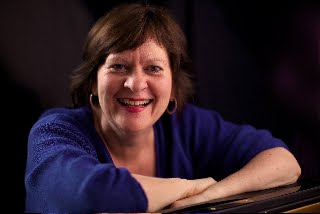
After winning Norway’s Youth Piano Competition at age 18, Signe Bakke studied at the Grieg Academy of the University of Bergen, where she now serves as associate professor. While pursuing graduate studies at Norges Musikkhøgskole (Norwegian Academy of Music) in Olso, she appeared as soloist with the Oslo Philharmonic Orchestra. Her concert tours since have included performances in Norway, Sweden, Finland, Iceland, Great Britain, Germany, the United States, Georgia and Azerbaijan. She has been a featured performer at various music festivals, including the Oslo Contemporary Music Festival and the Bergen International Festival. Signe Bakke's repertoire ranges from the Baroque era into the 21st Century, and she is much in demand as a collaborative artist. She frequently gives recitals at Edvard Grieg’s home, Troldhaugen, in Bergen, Norway, and she has recorded a number of CDs, including several featuring the music of Grieg and other Norwegian composers.
PROGRAM NOTES, by Edward Lein, Music Librarian

Edvard Grieg (1843-1907) is Norway's most famous composer, and he remains among the most popular of all the 19th-Century Romantics. A virtuoso pianist, Grieg is perhaps best known for his Piano Concerto in A minor, op. 16 (1868), as well as for the incidental music to Henrik Ibsen's play Peer Gynt, Op. 23 (1876). But Grieg was also a master of more intimate forms, and his originality is especially evident in his songs, many of which were composed for his wife, Nina Hagerup Grieg (1845-1935), and in the Lyriske stykker ("Lyric Pieces," 1867-1901) for piano solo, which earned him the nickname "Chopin of the North."

Grieg's personal favorites among his works included his three sonatas for violin and piano. As expressed in a letter written in 1900, he said they helped map his journey as a composer:

Last week I had the pleasure of performing my three violin sonatas with Lady Neruda-Hallé before a very discerning Danish audience and receiving a very warm response. I can assure you that we did very well and it had special significance for me, because these three works are among my very best and represent different stages in my development: the first, naïve and rich in ideas; the second, nationalistic; and the third with a wider outlook.
The "nationalistic" Sonata No. 2 in G major, Op. 13 (1867), incorporates elements derived from Norwegian folk music, including rhythms of the leaping springdans used in the outer movements. The Sonata was written during the three weeks while Grieg was on his summer honeymoon, which perhaps explains its unbridled optimism. However, the work does have some relatively gloomy flashes as well, because, as Norwegian composer Johan Svendsen (1840-1911) observed when discussing this piece by his famous friend, "a Norway without tragedy is not a complete Norway."


Claude Debussy (1862-1918) was a quintessentially French composer, pianist and music critic whose own revolutionary music ushered in many of the stylistic changes of the 20th Century. Debussy is universally identified as the chief proponent of musical Impressionism, but he did not approve of that label and the associations he felt it harbored. But since his death, the term as applied to music has been redefined almost exclusively around the characteristics of some of Debussy's most famous pieces, so whatever negative connotations "Impressionism" once may have had have since evaporated.

In 1915 he began composing what he announced would be a series of six sonatas for various instrumental combinations, but he was only able to complete three of them before his death from cancer. The Violin Sonata, composed in 1917 after the disease had begun to take it’s toll, was Debussy’s last completed work. While the lush harmonies echo his previous compositions, the sparser textures and simpler formal structure anticipate aspects of the neoclassical trend that became increasingly popular in the years following Debussy’s death.


Norwegian composer Johan Svendsen (1840-1911) was the most celebrated Scandinavian conductor during his lifetime, and his stature as a composer has not diminished among his countrymen. In addition to Norway, Svendsen lived variously in Germany, Italy, France, and England, but he spent the bulk of his professional life in Denmark as the music director of the Royal Opera in Copenhagen from 1883 until 1908, when failing health forced him into retirement.

Svendsen's father was a professional musician who taught his son both clarinet and violin, and Johan's talent afforded him the opportunity to study violin at the Leipzig Conservatory. But Svendsen developed problems with his hand soon after moving to Germany, so he switched his focus to composition. His primary teacher became Carl Reinecke (1824-1910), and the crowning achievement of Svendsen's final year of studies came when he was awarded the Conservatory's first prize in composition, in 1867. Demonstrating his special talent for orchestration, Svendsen's two symphonies and four Norwegian Rhapsodies were performed to great acclaim, and for a time he was even better known throughout Europe than was his friend Grieg. Composed in 1881, Svendsen's most famous work is the Romance, Op. 26, for solo violin with either orchestra or piano accompaniment.


At a time when it was fashionable to write programmatic music that illustrated specific scenes, poems, or stories, the great German composer Johannes Brahms (1833-1897) was recognized by his admirers as “Beethoven’s true heir” (Grove Concise Dictionary of Music) by demonstrating that established abstract formal procedures could be used to organize musical discourse without sacrificing the passion and deeply individualistic expression that defines 19th-Century Romantic music. Thus, Brahms joined Bach and Beethoven as one of the great “Three Bs” of classical music.

Contrasting with his lyrical first two violin sonatas, Brahms’s Sonata for Violin and Piano No. 3, Op. 108 (1886-88) has four movements rather than three and assumes an almost symphonic scale. The choice of D minor as the central key harkens back to the stormy world of Brahms’s youthful Piano Concerto no. 1, Op. 15 (1859), especially in the tarantella-like final movement, and the demanding piano part often resembles a concerto—there is no question that both instruments are meant to share the spotlight. As was very often the case with his works including the piano, Brahms played the piano part himself for the premiere, so it is evident that in addition to being one of our most enduring composers he was also a virtuoso performer.


GRIEG: Romance. This piece is the 2nd movement from Sonata for Violin and Piano No. 3, Op. 45, arranged for violin with cello ensemble by Ekkehard Hessenbruch. The arrangement begins with the violin entrance, at measure 45.

Performed by Michael Süssmann, violin, with the Engelberger Kammercellisten, at the 2010 Grieg in Bergen festival.


BULL: Ad Usum Amicorum, op. 20. From the concert in Gunnar Sævigsal (Bergen, Norway) on Sunday, April 29th, 2012, as part of a festival dedicated to the music of Hagerup Bull, hosted by the Grieg Academy.

Performed by Signe Bakke, piano; Sofya Dudaeva, flute; Ricardo Odriozola, violin; and Ivan Smilovski, cello.


Thursday, October 14, 2010

Intermezzo Sunday Concert, 11/14/2010 @ 2:30pm


Sunday Wakening

Piotr Szewczyk, violin

Six pieces from Violin Futura 3

Gary Smart, piano

Blossoms : Solo Piano Improvisations

Two in One!
1. The Jacksonville Symphony Orchestra's Piotr Szewczyk premieres pieces for unaccompanied violin written especially for him by composers from around the world.
2. UNF Professor Dr. Gary Smart presents free-wheeling piano improvisations ... Discard the labels--Expect the unexpected!


Polish-born violinist and composer Piotr Szewczyk (b. 1977) studied composition and violin at the University of Cincinnati College-Conservatory of Music, and while earning both Bachelor and Master of Music degrees as well as his Artist Diploma, Piotr served as concertmaster of several of the College-Conservatory's orchestras. He then received a fellowship at the New World Symphony in Miami Beach where he served as rotating concertmaster under Artistic Director Michael Tilson Thomas. The winner of the 2006 New World Symphony Concerto competition, Mr. Szewczyk has appeared as soloist with numerous ensembles, including the Lima Symphony, New World Symphony, World Youth Symphony Orchestra, Queen City Virtuosi, and the Aspen Contemporary Ensemble. Piotr also has given solo and chamber recitals in the United States, Poland, Germany and Austria, and his own award-winning compositions have been performed by numerous orchestral and chamber ensembles, and at the American Symphony Orchestra League Conference by ALIAS Ensemble in Nashville. Mr. Szewczyk’s string quintet, The Rebel, was performed live on the CBS Early Show by the Sybarite Chamber Players, and was also featured on NPR's Performance Today. Piotr joined the Jacksonville Symphony Orchestra in September 2007, and in 2008 he won a commission from the Symphony by placing first in its Fresh Ink composition competition. The resulting piece, First Coast Fanfare, was premiered by the Jacksonville Symphony on April 15th of this year.

Mr. Szewczyk's critically-acclaimed Violin Futura project features recitals of short, exciting and innovative solo violin pieces newly-written for him by composers from the United States, Germany, England and Japan. Currently working on the third program group in the series, Szewczyk has performed Violin Futura at numerous festivals and universities including Spoleto Festival USA, Berklee College of Music in Boston, University of Florida, University of Wisconsin-Eau Claire, Santa Fe New Music Festival, University of Cincinnati, University of North Florida, EMMA Lecture Series at Flagler College, Bavarian Academy of Arts in Munich, Germany, New Museum of Art and Design in Nuremberg, Germany and many others.

For this Intermezzo recital, Mr. Szewczyk will perform:
More about Mr. Szewczyk at verynewmusic.com


Gary Smart's career has encompassed a wide range of activities as composer, classical and jazz pianist, and teacher. A true American pluralist, Dr. Smart composes and improvises a music that reflects an abiding interest in world musics, Americana and jazz, as well as the Western classical tradition. Always
a musician with varied interests, he may be the only pianist to have studied with Yale scholar/keyboardist Ralph Kirkpatrick, the great Cuban virtuoso Jorge Bolet, and the master jazz pianist Oscar Peterson.

Smart’s work has been supported by the Guggenheim Foundation, the Ford Foundation, the Music Educator's National Conference, the Music Teacher's National Association, and the National Endowment for the Arts. Smart’s music has been performed in major venues in the United States, including the Kennedy Center and Carnegie Hall, as well as venues in Europe and Asia. His Concordia for orchestra won the Concordia jazz composition award and was premiered at Lincoln Center, New York. His Song of the Holy Ground for string quartet and piano won the 2008 John Donald Robb Musical Trust Composers’ Competition and was premiered at the 2009 Robb Composers’ Symposium at the University of New Mexico.

Smart's compositions are published by Margun Music (G. Schirmer) and his work has been recorded on the Mastersound, Capstone and Albany labels. His CD’s The Major’s Letter, songs for voice and piano, American Beauty – a ragtime bouquet, Hot Sonatas, a collection of jazz-influenced chamber music, and Turtle Dreams of Flight, original music for solo piano performed by the composer, have all been released recently by Albany Records.

Blossoms, a recording of his solo piano improvisations, is currently in production.

Dr. Smart spent two residencies in Japan, teaching in programs at Osaka University and Kobe College. He also taught in Indonesia as "Distinguished Lecturer in Jazz" under the auspices of the Fulbright program. From 1999-2003, he served as Chairman of the UNF Music Department. Gary Smart is currently a Presidential Professor of Music at the University of North Florida.

More about Dr. Smart at garysmart.net


Tuesday, September 21, 2010

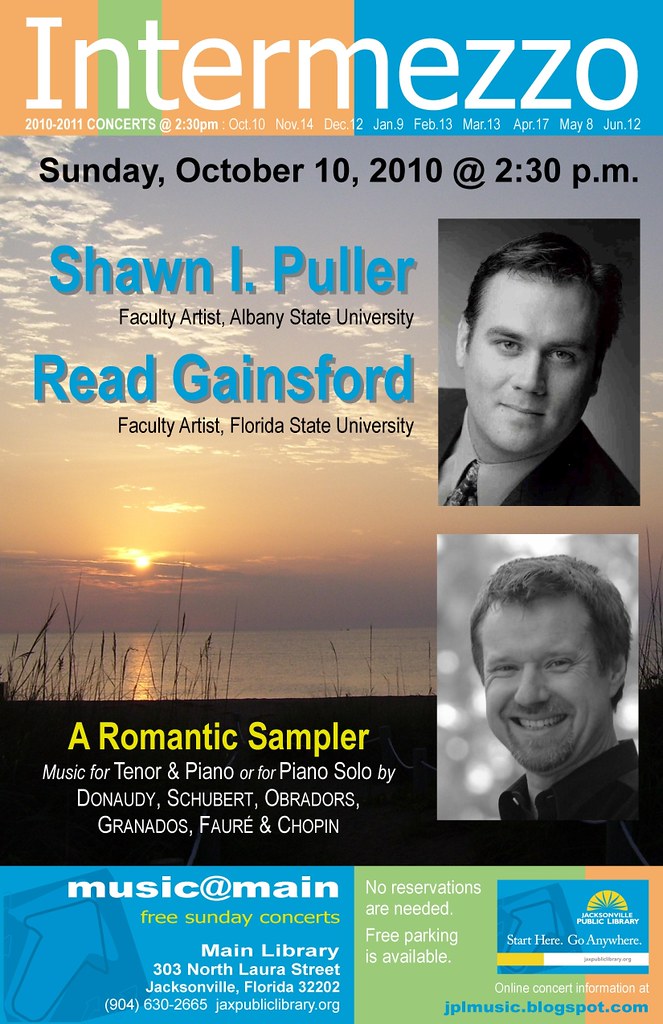
Intermezzo Sunday Concert, 10/10/2010 @ 2:30pm

A Romantic Sampler

oct10-flyer

Shawn I. Puller, tenor [Jacksonville Debut]
Read Gainsford, piano

Faculty artists from Albany State University and Florida State University team up for an afternoon of song and solo piano music!
PROGRAM SELECTIONS
  • Stefano Donaudy (1879-1925)
    Sento nel core -- Ah, mai non cessate -- Quando ti rivedrò -- O del mio amato ben
  • Franz Schubert (1798-1828)
    Impromptu in B-flat major, D. 935 No.3
  • Franz Schubert (1797-1828)
    Der Jüngling an der Quelle -- Der Jüngling am Bache -- Der Jüngling und der Tod
  • Fernando Obradors (1897-1945)
        Selections from Canciones clásicas españolas
    La mi sola, Laureola -- Del cabello más sutil -- Al amor
  • Enrique Granados (1867-1916)
    La Maja y el Ruiseñor
  • Gabriel Fauré (1845-1924)
    Lydia -- Içi-bas -- Adieu
  • Frédéric Chopin (1810-1849)
    Ballade No. 4 in F Minor, Op. 52
PROGRAM NOTES, by Ed Lein, Music Librarian

Tenor Shawn Puller (Ph.D) is an Assistant Professor of Music at Georgia's Albany State University, and has taught in New York at SUNY Cortland and Ithaca College, as well as at Florida State University, where he is on the faculty of their Summer Music Camps. As director of both bands and choruses his teaching experience includes instruction of children as well as young adults, and as a vocal soloist, in addition to art-song literature, his repertoire includes opera, oratorio, and other large-scale choral works. Shawn has directed the music programs of several churches, and also has served as the Assistant Director of the Heifetz International Music Institute, in Wolfeboro, New Hampshire. Among other professional organizations, Dr. Puller is an active member of the National Association of Teachers of Singing, and serves as the head Archivist of the Georgia Chapter of NATS. This recital marks his Jacksonville debut.

Pianist Read Gainsford (D.M.) has performed widely in the USA, Europe, Australia, South Africa, and his native New Zealand as solo recitalist, concerto soloist and chamber musician. He has made successful solo debuts at the Wigmore Hall and Carnegie Hall's Weill Recital Hall, and has performed in many other prestigious venues, including the Kennedy Center, Queen Elizabeth Hall, Barbican Centre, Fairfield Halls, Birmingham Town Hall and St.-Martin-in-the-Fields. Dr. Gainsford has recorded for the Amoris label, BBC Radio Three, Radio New Zealand's Concert Programme, and has broadcast on national television in New Zealand, the UK, and Yugoslavia. Since moving to the United States in 1992, Read has been a guest artist for the American Music Teachers Association, has appeared at the Gilmore Keyboard Festival and the Music Festival of the Hamptons, and spent several summers as a member of the collaborative pianist faculty at the Heifetz International Music Institute. He is a member of the contemporary music group Ensemble X, the Garth Newel Chamber Players, and as the pianist with FSU's Trio Solis he has performed here twice previously for our Music @ Main programs. Formerly on the faculty of Ithaca College where he received the college-wide Excellence in Teaching Award in 2004, Dr. Gainsford became Associate Professor of Piano at FSU in 2005.

Don't feel too badly if you don't recognize the name of Stefano Donaudy (1879-1925)--although the Sicilian-born composer rates a place in Baker's Biographical Dictionary of Musicians (2001), there is no entry for him in the 2nd edition of New Grove Dictionary (also 2001). As a precocious "tween" Donaudy wrote Folchetto (1892), the first of his six operas. He enjoyed early successes with both his songs and operas, and he also composed a few purely instrumental pieces, including a symphonic poem, Le Rêve de Polysende. But his luck ran out with his poorly-received final opera, La Fiamminga (Naples, 1922), and the disappointment at its failure (apparently coupled with declining health) caused him to abandon composing for his few remaining years. Despite the composer's relative obscurity, several of Donaudy's three dozen Arie di Stile Antico ("Arias in Antique Style") have been championed from the early recorded era to the present day by many the world's foremost singers, including the famous tenors Enrico Caruso, Beniamino Gigli, Luciano Pavarotti, Plácido Domingo, José Carreras, and Andrea Bocelli.

Click the titles for texts & translations:
Sento nel core (I feel in my heart)
(36 Arie di Stile Antico, no. 9, 1918)
    Text: Anonymous

Ah, mai non cessate dal vostro parlar (Ah, never cease thy speech )
    (36 Arie di Stile Antico, no. 7, 1918)
    Text: Alberto Donaudy (1880-1941)

Quando ti rivedrò? (When might I see thee once again?)
(36 Arie di Stile Antico, no. 22, 1918)
    Text: Alberto Donaudy (1880-1941)
O del mio amato ben perduto incanto! (O thou, my most belov’d enchantment, lost!)
(36 Arie di Stile Antico, no. 18, 1918)
    Text: Alberto Donaudy (1880-1941)

During his short lifetime the Austrian composer Franz Schubert (1797-1828) composed hundreds of works of astounding lyric beauty, including symphonies, chamber works, masses, solo piano music, and songs. Although his music was regularly performed in private concerts for Vienna’s musical elite, Schubert was never able to secure a publisher for the bulk of his masterworks, so he depended on his devoted circle of friends for maintaining his finances. After his death (probably from medicinal mercury poisoning), Schubert’s wish to be buried next to Ludwig van Beethoven (1770-1827) was honored.
In 1827, Schubert wrote two sets of Impromptus for solo piano, with four pieces in varying musical forms in each set. His Impromptu in B-flat major, D. 935, No.3, is from the second set, published posthumously as his Op. 142. The piece is a theme with variations on a tune derived from his incidental music to the play, Rosamunde (D. 797, 1823), and also used in his String Quartet, No. 13, D. 804 (1824).
Schubert, who composed over 600 songs, has remained unsurpassed in his ability to marry poetry with music, and his song-writing genius was touted by no less than Beethoven—although the two composers apparently never met, during his final illness Beethoven was given scores to some of Schubert’s songs, and the older master expressed his great admiration for the younger composer’s artistry.

Der Jüngling an der Quelle (The Youth at the Spring)
 (D.300, ca.1816?, published 1842)
    Text: Johann Gaudenz Freiherr von Salis-Seewis (1762-1834)
Der Jüngling am Bache (The Youth by the Brook)   
Text (1803): Friedrich von Schiller (1759-1805)

Der Jüngling und der Tod (The Youth and Death)
 (D. 545, 1817, pub.1872)    
Text: by Joseph von Spaun (1788-1865)

Fernando Obradors (1897-1945) was a self-taught Catalan composer, pianist and conductor. Although he wrote orchestral music as well as a considerable amount of music for the stage, he is best remembered for his four sets of Canciones clásicas españolas, collected and arranged between 1921-1941. Obradors' settings perfectly capture the essence of the folk-songs, and they remain among the most popular Spanish-language songs in the repertoire of classically-trained singers.

La mi sola, Laureola (My Only Laureola)
(Canciones clásicas españolas, no. 7)
    Text: Juan Ponce (b.ca.1480)
Del cabello más sutil (From That Finest Hair)
(Canciones clásicas españolas, no. 4)
    Text: Anonymous
Al Amor (To My Love)
(Canciones clásicas españolas, no. 1)
    Text: Cristobal de Castillejo (d. 1550)

Like Obradors, Enrique Granados (1867-1916) was born in the Spanish region of Catalonia, and Granados' music is so characteristically "Spanish" that he is regarded as one of his homeland's most representative composers. His Goyescas (1909-11), a suite of 6 pieces in 2 books and inspired by the paintings of Francesco Goya, ranks with Iberia, by Isaac Albéniz (1860-1909), as the finest piano works from Spain. The famous Quejas, ó la maja y el ruiseñor (“Lament, or, The Maiden and the Nightingale”), is an intricate nocturne with glittering, bird-like trills near its conclusion. Granados himself premiered Goyescas, so it is clear that he was a virtuoso performer as well as composer.

Gabriel Urbain Fauré (1845-1924) was a composer, organist, pianist and teacher, and he is widely regarded as the greatest master of the French art-song and the foremost French composer of his generation. Although Fauré greatly admired Wagner he remained relatively free of Wagner’s highly-colored influence, and instead led his own harmonic revolution by treating chords with added 7ths and 9ths as consonant and by introducing modal inflections into an essentially diatonic framework; in the process he successfully bridged the styles of Saint-Saëns (his teacher) and Ravel (his student). Fauré’s compositions are distinguished by perfectly crafted melodies floating over rich and radiant backgrounds, and among his best-known works is the hauntingly beautiful choral Requiem.

Lydia
(Op.4, no,2)
    Text: Leconte de Lisle (1818-1894)
Ici-bas! (Here Below)
(Op.8, no.3, 1874?)
    Text: R.-F. Sully-Prudhomme (1839-1907)
Adieu
(Op. 21, no.3, 1878)
    Text: Charles Jean Grandmougin (1850-1930)


The Polish-born pianist Frédéric Chopin (1810-1849) was the first composer to make full use of the expressive qualities and coloristic potential of the piano when it was a still-developing keyboard instrument, and he rightly has been called the "Poet of the Piano." Much of all piano music by subsequent composers shows his influence, and his revolutionary use of chromatic harmonies and unusual key relationships profoundly influenced composers of symphonic music and operas as well, such as Franz Liszt and Richard Wagner--thus Chopin's importance in the development of the "Romantic" style in general can not be overestimated. Among his many achievements, Chopin is credited with establishing the Ballade as an extended instrumental form, and all four of his solo piano works bearing this title are considered among the crowning achievements of the Romantic period. British pianist and composer John Ogdon (1937-1989) called the Ballade No. 4, Op.52, completed in 1842, ”the most exalted, intense and sublimely powerful of all Chopin’s compositions ... it contains the experience of a lifetime.”